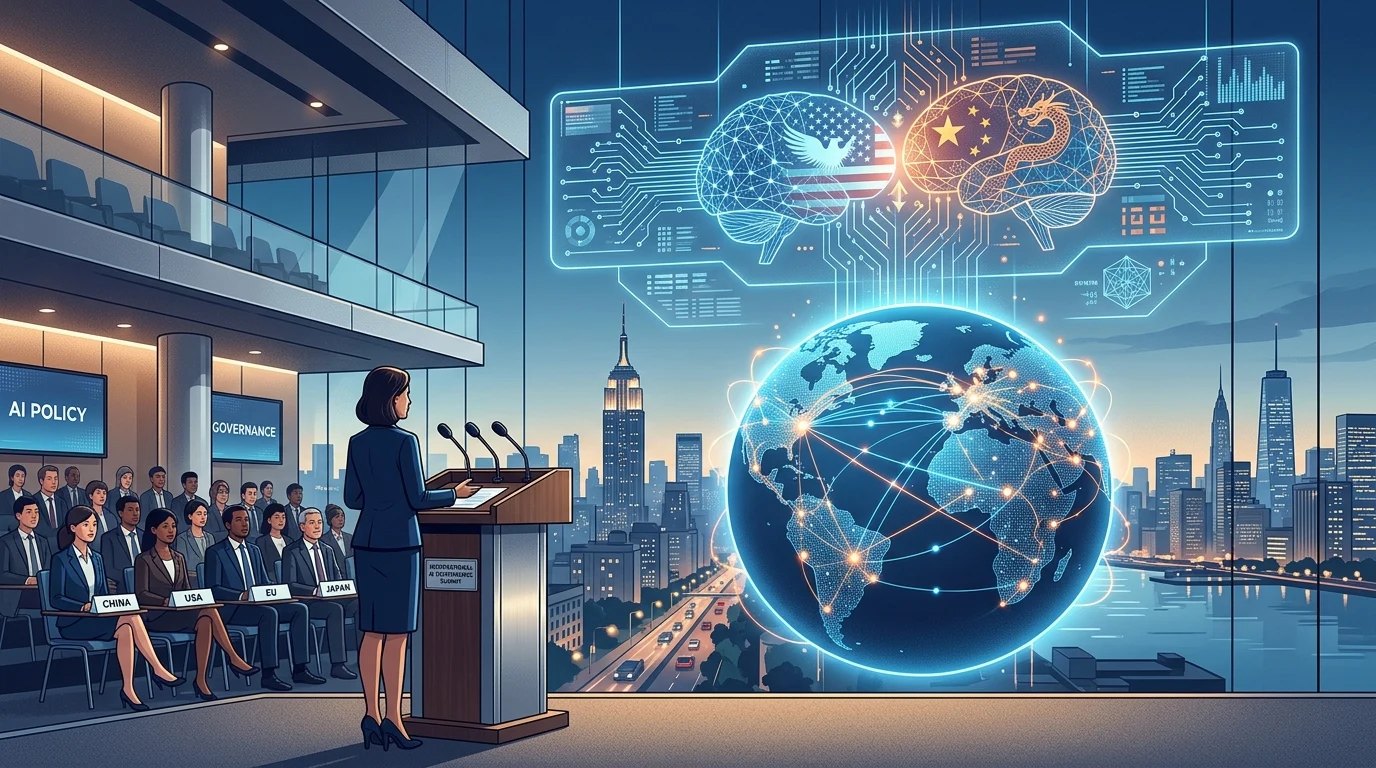
Delivering a major policy address at the Institute for International Economics on Tuesday, November 10, United States Treasury Secretary Scott Bessent articulated the administration's comprehensive economic and technological doctrine regarding artificial intelligence competition with the People's Republic of China. Ahead of upcoming bilateral diplomatic working sessions, Secretary Bessent outlined a strategy designed to sustain American technological supremacy in frontier semiconductor manufacturing while simultaneously establishing cross-border protocols to prevent systemic AI algorithmic contagion across global capital markets.
Defending the Frontier Compute Advantage
Secretary Bessent underscored that technological superiority in high-performance artificial intelligence represents the central pillar of 21st-century economic statecraft. In his address, he reaffirmed that outbound investment screening mechanisms, implemented under federal executive orders, will be expanded to encompass advanced quantum computing clusters and next-generation lithography tooling.
"The United States will not finance or facilitate the development of sovereign compute clusters intended to circumvent intellectual property standards or compromise global security architectures," Bessent declared. "We are committed to maintaining a generational lead in high-bandwidth memory, optical interconnects, and silicon packaging, ensuring that the foundational hardware of artificial intelligence remains anchored in democratic economies."
Mitigating Systemic Algorithmic Contagion in Finance
In a notable expansion of the Treasury's regulatory perimeter, Secretary Bessent devoted significant attention to the domestic and international financial risks posed by autonomous trading bots, multi-agent automated risk models, and generative models operating across sovereign debt markets. The Secretary cautioned that without harmonized algorithmic circuit-breakers, synchronized high-frequency sell-offs triggered by overlapping AI reasoning frameworks could destabilize sovereign bond liquidity.
To address this risk, the Treasury Department is proposing a multilateral "Financial AI Stability Pact" among G7 and G20 finance ministers. The pact would require Tier-1 financial institutions to maintain independent algorithmic override switches, stress-test generative models against multi-market flash crash scenarios, and preserve segregated reserve liquidity buffers that cannot be allocated by automated agentic systems.
Silicon Valley and Industry Reaction
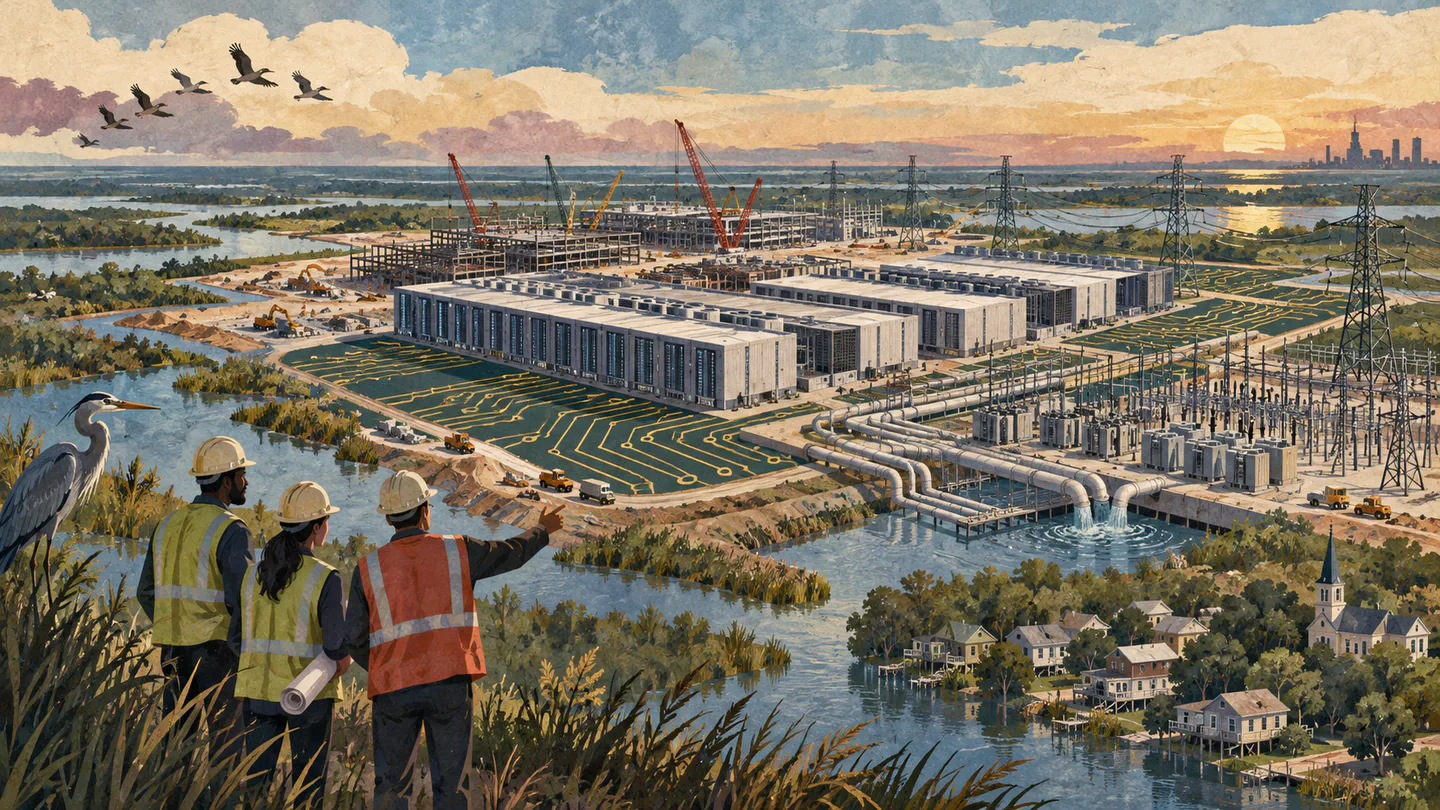
The Secretary’s remarks received close scrutiny from semiconductor executives, cloud infrastructure hyperscalers, and venture capital consortiums. While tech leaders welcomed federal assurances of sustained CHIPS Act tax incentives and permitting exemptions for domestic nuclear-powered AI data campuses, export-reliant technology vendors expressed concern regarding potential secondary sanctions that could restrict non-critical commercial cloud services in Asian markets.
Treasury officials reiterated that the proposed doctrine aims to balance commercial innovation with national resilience. Bilateral technical working groups between Washington and Beijing are scheduled to commence exploratory discussions next month in Geneva, focusing specifically on establishing red lines regarding autonomous cyber defense and sovereign financial systems.
Editorial Fact Check & Key Findings
Key points
- Outbound investment screening expanded to encompass advanced quantum and next-gen lithography.
- Proposed multilateral Financial AI Stability Pact with Tier-1 bank circuit breakers.
- Bilateral technical working group talks slated to commence in Geneva.
What the evidence shows
Secretary Bessent delivered a major address outlining American compute leadership, semiconductor restrictions, and proposed G7/G20 financial circuit breakers against automated AI contagion.
Background and limits
The doctrine sets the administration's negotiating baseline ahead of bilateral working group meetings in Geneva.
Why this matters
Official Treasury executive statements define international economic policy, trade restrictions, and financial regulatory standards.