Confronting severe multi-year transmission queues, chronic transformer shortages, and a fierce wave of post-midterm local zoning moratoria, the world’s leading artificial intelligence infrastructure developers are undertaking unprecedented measures to secure electrical power. Over the weekend, reports from top engineering forums and enterprise energy consultancies revealed that tech developers are increasingly purchasing converted, retired commercial aircraft jet engines from aerospace storage facilities to serve as rapid-deployment stationary gas turbines directly powering hyperscale AI server clusters.
The Transmission Grid Wall and the Shift "Behind the Meter"
The transition toward "behind-the-meter" captive power generation marks a radical departure from traditional data center architecture. Historically, cloud facilities connected directly to public utility grids, negotiating long-term power purchase agreements. However, with interconnection queues now stretching past 2030 in regional grid hubs such as Virginia’s PJM Interconnection, Texas’s ERCOT, and the desert Southwest, waiting for utility transmission line buildouts has become unviable for companies racing to train next-generation foundation models.
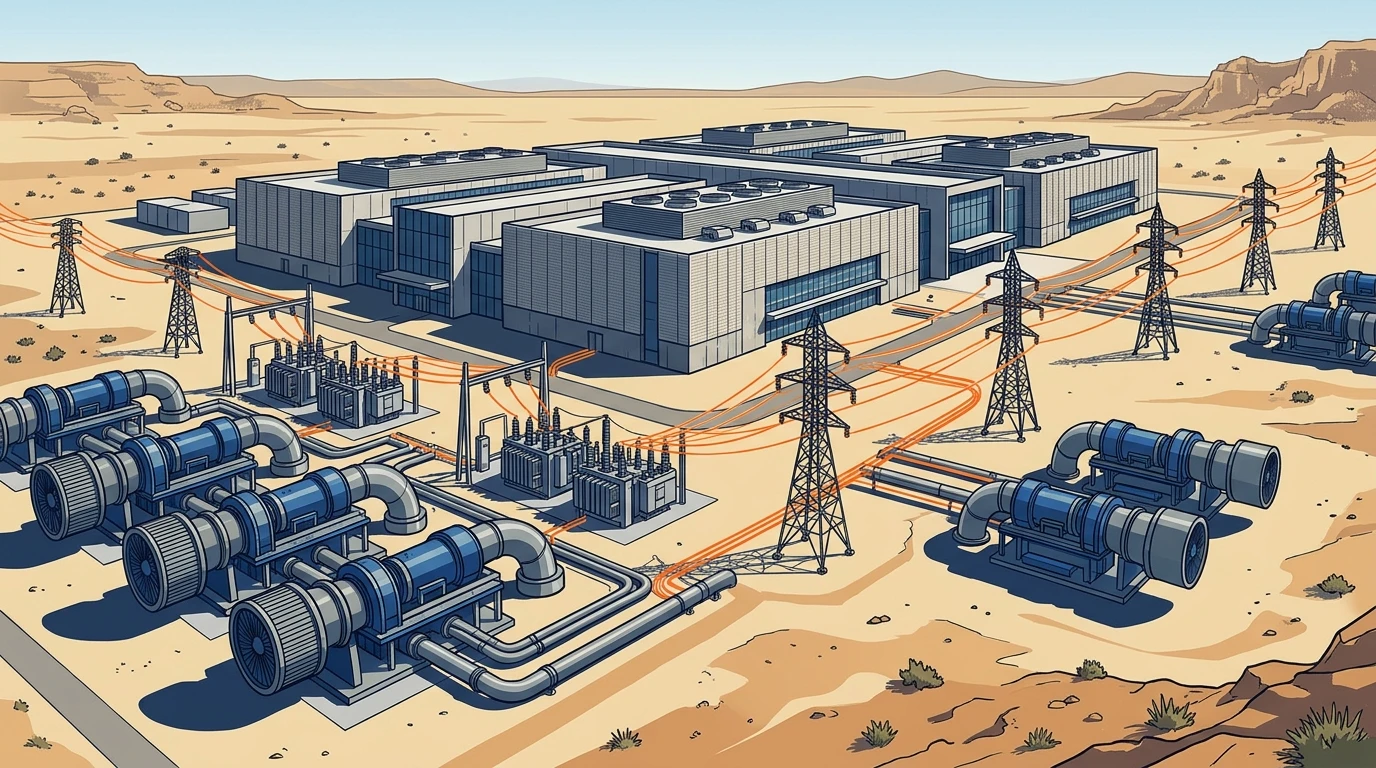
Energy strategists estimate that between 30% and 50% of new large-scale data center capacity slated for development over the next 24 months will rely on dedicated, on-site power generation. Repurposed aeroderivative jet engines, originally engineered for Boeing and Airbus widebody aircraft, are modified to burn natural gas or biofuels, delivering between 30 and 50 megawatts of continuous baseload generation per unit. These modular power stations can be installed and synchronized within six to nine months, bypassing regional utility queues entirely.
Midterm Election Backlash Intensifies Local Scrutiny
The push for captive power generation has acquired urgent political momentum following the decisive results of Tuesday’s midterm elections. Across ten states, local communities voted overwhelmingly to reject or heavily restrict commercial data center developments, passing anti-data-center initiatives in 40 out of 41 local ballot contests. In suburban and rural districts across Georgia, Ohio, and Michigan, grassroots coalitions successfully mobilized voters by linking massive utility-scale computing centers directly to soaring residential electricity rates and regional water table depletion.
With newly elected governors and state legislative majorities signaling impending moratoria on public utility grid subsidies for commercial computing, tech executives realize that relying on public electrical infrastructure carries unacceptable political risk. On-site power installations insulate tech operators from public backlash while shielding everyday consumers from grid modernization rate hikes.
The Rise of "Load Flexing" and Corporate Community Compacts
To salvage community relations and secure operating permits, major AI consortiums—including Google, NVIDIA, and OpenAI—are introducing binding community energy agreements. Initiatives organized under the AI Energy Management Alliance commit operators to implement advanced "load flexing" software, allowing computing clusters to automatically throttle electricity consumption by 25% to 40% during peak municipal cooling or heating emergencies.
Furthermore, leading AI developers have pledged dedicated capital funds to underwrite municipal substation improvements, install district heating systems utilizing data center exhaust warmth, and co-invest in regional clean energy storage. As computing clusters demand gigawatt-scale power allocations, the tech sector’s survival is becoming indivisible from physical energy innovation, fundamentally transforming Silicon Valley from a software ecosystem into an industrial energy powerbroker.
Editorial Fact Check & Key Findings
Key points
- AI developers are acquiring retired commercial jet engines converted into gas turbines.
- Aeroderivative turbines provide 30-50 MW of rapid baseload power in 6-9 months.
- Interconnection queues in major regional grids stretch beyond 2030.
What the evidence shows
Confronting multi-year electrical grid queues and post-midterm voter moratoria, AI infrastructure developers are deploying aeroderivative jet turbines for on-site power.
Background and limits
Between 30% and 50% of new large data center capacity is moving toward behind-the-meter generation to avoid regional utility interconnect delays.
Why this matters
Technical electrical engineering disclosures and aerospace power repurposing illuminate the physical infrastructure limits of artificial intelligence.