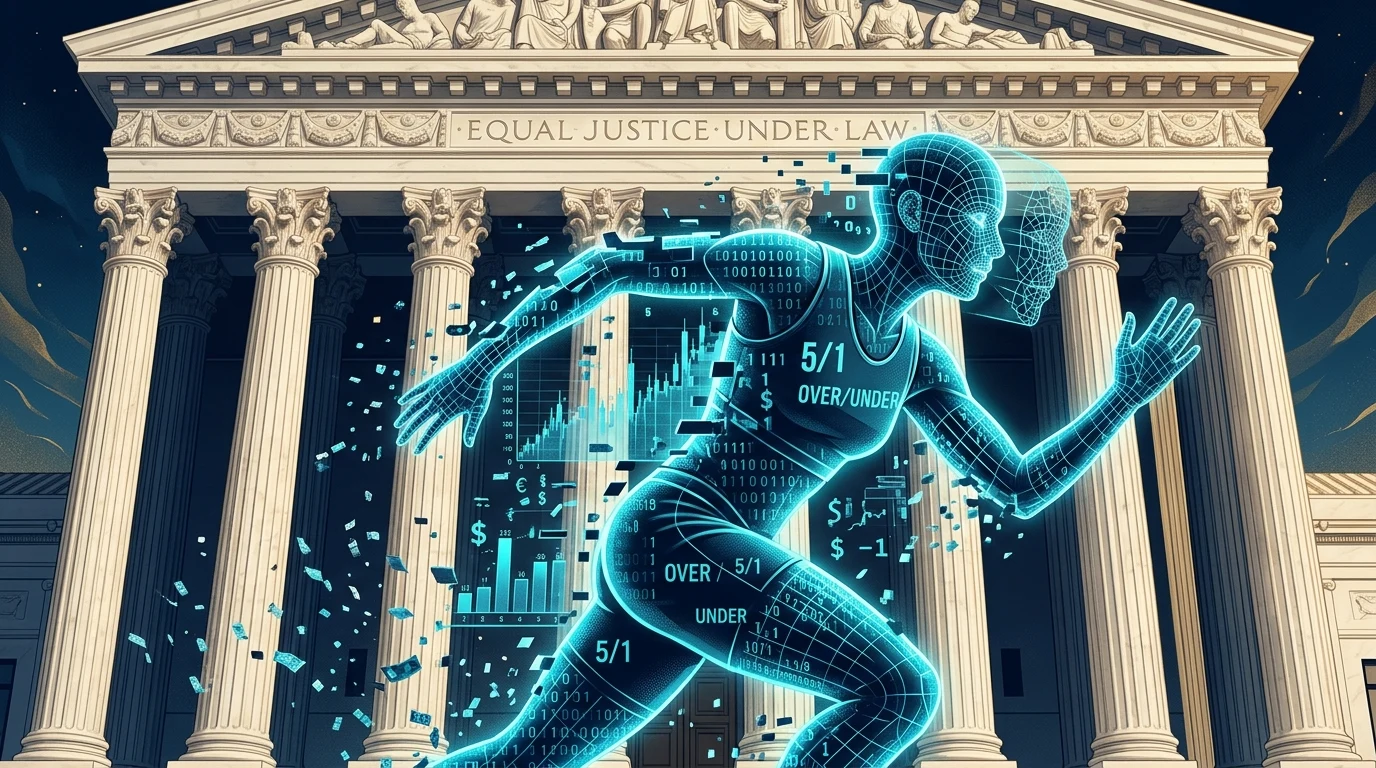
When LeBron James—one of the most recognizable cultural icons on the planet—is forced to file a federal lawsuit to prevent mobile gambling apps from synthesizing his voice and physical likeness through artificial intelligence deepfakes, it is no longer an intellectual property squabble among the wealthy. It is an undeniable warning that our nation's legal infrastructure governing human digital identity is fundamentally broken. If a billionaire athlete with a platoon of trademark litigators struggles to prevent predatory commercial actors from counterfeiting his digital persona, everyday citizens stand virtually defenseless against algorithmic identity theft.
The Dangerous Convergence of Deepfakes and Sports Wagering
The rapid legalization of online sports betting across the United States has unleashed a multi-billion-dollar marketing gold rush. In their aggressive competition for user acquisition, unregulated digital platforms are increasingly weaponizing generative artificial intelligence. By synthesizing the cadence, appearance, and reputation of revered public figures without consent, these apps exploit the psychological phenomenon of parasocial trust, tricking impressionable sports fans—particularly young men and teenagers—into believing that trusted heroes are validating specific wagering models.
This is not merely false advertising; it is a profound violation of personhood. In the digital age, an individual's biometric likeness, voice, and personal reputation represent the core of their human agency. Allowing commercial entities to steal that identity through algorithmic cloning strips individuals of the fundamental right to decide what products, causes, or commercial transactions they endorse.
The Failure of the Patchwork State Law Model
For more than a century, American right-of-publicity doctrine has been governed by a fractured patchwork of state statutes and common-law precedents. What constitutes an actionable misappropriation in New York or California may be entirely unprotected in neighboring jurisdictions. But digital algorithms recognize no state borders; an unauthorized AI ad generated on a laptop in Austin can be viewed simultaneously by millions of smartphone users from Seattle to Miami.
Relying on state-level common-law litigation places an impossible burden on victims, requiring years of costly discovery while bad actors dissolve corporate shells and pocket illicit gambling revenues. What is urgently required is comprehensive federal legislation: a Federal Digital Identity and Likeness Protection Act that establishes a universal, non-waivable federal property right in every citizen’s biometric likeness and synthetic persona.
Protecting Human Agency in an Artificial World
The lawsuit brought by LeBron James must serve as an urgent catalyst for congressional action. Federal law must impose strict statutory damages and criminal penalties on commercial platforms that deploy synthetic likenesses without verified, cryptographic consent. As generative artificial intelligence makes the fabrication of human reality trivial, defending the sanctity of human identity is the defining civil liberties battle of our century.
Editorial Fact Check & Key Findings
Key points
- Argues that unauthorized synthetic endorsements in gambling apps weaponize parasocial trust.
- Contends that state-level common-law publicity statutes fail against borderless digital algorithms.
- Calls for a Federal Digital Identity and Likeness Protection Act with statutory damages.
What the evidence shows
An incisive legal commentary asserting that LeBron James's lawsuit against a sports betting app demonstrates that fragmented state laws cannot protect human identity against AI deepfakes, demanding a federal digital likeness statute.
Background and limits
Examines the rise of synthetic media in mobile sports gambling and the lack of uniform federal digital identity rights.
Why this matters
Legal analysis supported by right-of-publicity case law, FTC commercial deception guidelines, and federal dockets.