
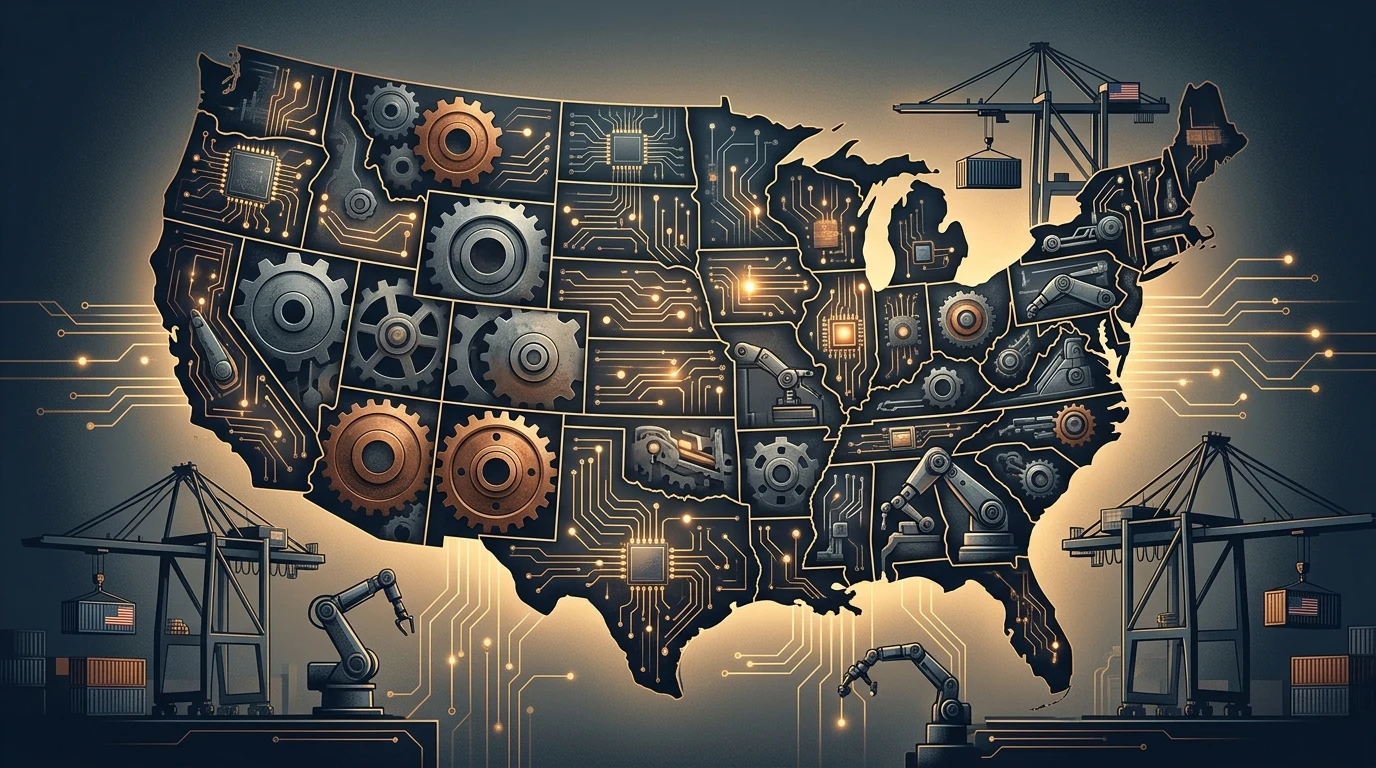
The geopolitical shocks of late 2026 have stripped away the final illusions of frictionless globalized manufacturing. From maritime shipping disruptions across Persian Gulf transit straits to the precarious concentration of advanced semiconductor foundries within range of foreign missiles, the United States finds itself confronting a sobering reality: national sovereignty cannot survive on intellectual property designs alone when the physical capability to fabricate essential physical components resides thousands of miles across vulnerable seas.
The Dangerous Illusion of Virtual Autonomy
For more than three decades, American economic orthodoxies celebrated capital-light corporate models, offloading foundry production, heavy metallurgy, pharmaceutical chemical synthesis, and telecommunications fabrication to lower-cost foreign centers. Wall Street applauded the resulting margin expansions, but the strategic ledger accumulated catastrophic structural debt. When unexpected crises emerge, an economy that cannot stamp its own circuit boards, forge its own industrial turbines, or refine its own battery minerals possesses only the illusion of global leadership.
Recent federal court rulings and congressional hearings over tech export controls have made clear that administrative decrees cannot substitute for domestic production capacity. Banning the export of silicon designs or sanctioning offshore cloud brokers is merely an exercise in tactical damage control. True strategic deterrence is achieved only when American industrial plants, domestic foundries, and skilled technical workforces can supply critical domestic infrastructure independently of external blackmail.
Transcending Partisan Division for Industrial Policy
The results of the recent midterm elections, which installed a divided Congress in Washington, provide a rare and urgent opening for durable legislative consensus. While cultural debates routinely fracture Capitol Hill, industrial rejuvenation offers a natural common ground. Working-class communities in the Rust Belt and the Deep South share an urgent appetite for dignified, well-compensated technical manufacturing jobs, while national security strategists understand that our defense industrial base is dangerously brittle.
A second-generation CHIPS and Industrial Defense Act must move beyond subsidies for multinational technology conglomerates to invest aggressively in foundational supplier ecosystems: precision tooling, electrical transformer factories, chemical precursor synthesis, and vocational apprenticeship colleges. Rebuilding domestic capability requires steady, multi-decade capital commitments insulated from biennial electoral swings.
The Time for Strategic Rebuilding Is Now
History rarely grants nations a second opportunity to rectify strategic negligence before a crisis forces the issue. As winter approaches and global geopolitical flashpoints multiply, the mandate for Washington is unambiguous: abandon ideological purism, invest in the physical machinery of American production, and ensure that our critical economic architecture is anchored firmly on domestic soil.
Editorial Fact Check & Key Findings
Key points
- Argues that intellectual property designs cannot replace physical domestic fabrication capacity.
- Calls for a second-generation CHIPS Act prioritizing foundational suppliers and precision tooling.
- Identifies divided Congress as an opportunity for bipartisan consensus on domestic manufacturing jobs.
What the evidence shows
An incisive political commentary asserting that geopolitical shocks and fragile semiconductor supply chains necessitate a durable, bipartisan domestic industrial renaissance rather than reliance on administrative export decrees.
Background and limits
Examines the strategic vulnerabilities exposed by Persian Gulf tensions, chip bottlenecks, and divided government in Washington.
Why this matters
Economic analysis grounded in documented manufacturing capacity indices, trade flows, and historical industrial policy.