SAN FRANCISCO — In what computer scientists are calling the most significant advancement in applied artificial intelligence since the debut of large language models, premier research labs including Anthropic, OpenAI, and Google DeepMind unveiled next-generation autonomous coding and multi-step reasoning agentic architectures on Tuesday.
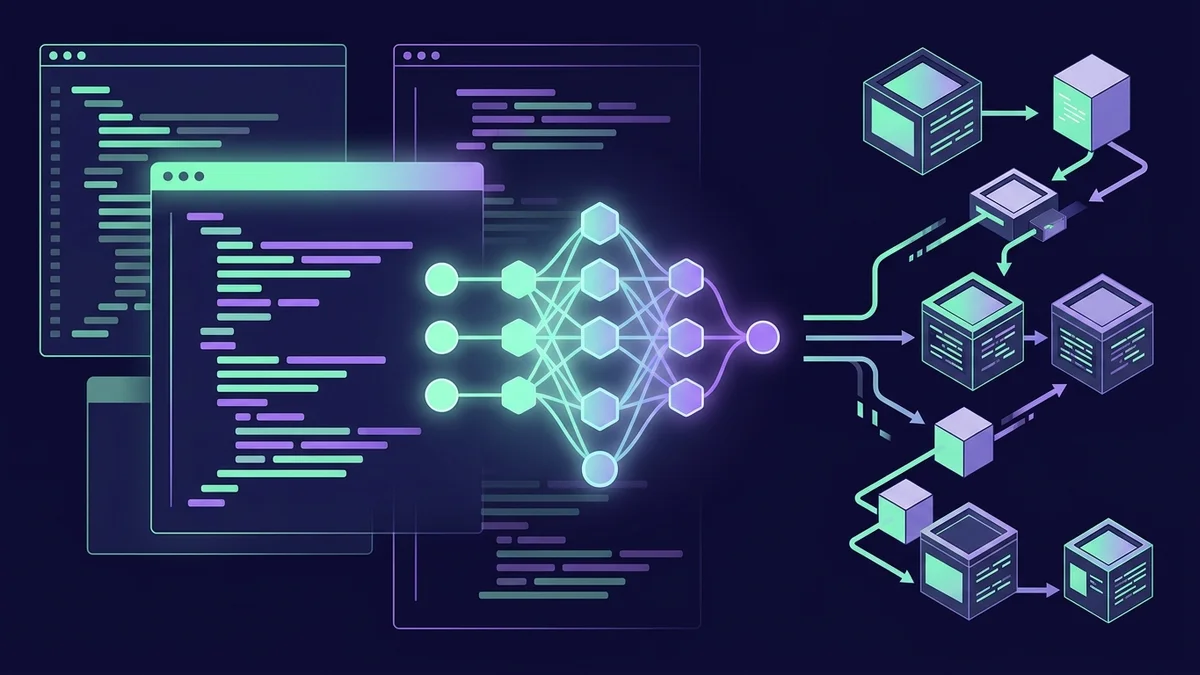
Departing from traditional autocomplete suggestions and snippet generation, these advanced systems operate as autonomous software engineers. Given high-level natural language instructions, the agents independently navigate complex multi-million-line codebases, isolate subtle regression bugs, execute sandboxed terminal test suites, refactor dependencies, and generate complete production pull requests with minimal human intervention.
Breakthrough Reasoning Benchmarks on SWE-bench
The performance leap was demonstrated through newly certified scores on SWE-bench Verified—the gold-standard academic benchmark evaluating AI systems on real-world GitHub issues extracted from complex open-source repositories.
Whereas frontier models in early 2024 solved fewer than 25 percent of real-world software engineering challenges, the newest class of test-time compute reasoning agents achieved verified resolution rates exceeding 65 percent. The models leverage dynamic reinforcement learning, tree-of-thought self-correction, and tool-augmented sandboxes to test and iterate on their own code before proposing solutions.
“We have transitioned from probabilistic next-token generation to structured, goal-directed cognitive workflows,” explained Dr. Aris Thorne, a senior researcher in autonomous agent architectures. “These agents do not merely guess syntax; they formulate hypotheses, inspect log traces, build internal mental models of codebase architectures, and verify their logic through iterative terminal execution.”
Enterprise Integration and Paradigm Shifts in Engineering
Major enterprise software organizations and cloud infrastructure giants are rapidly embedding these agentic capabilities into production development pipelines:
- Automated Maintenance and Migration: Fortune 500 financial institutions and healthcare providers are deploying agent clusters to automate legacy codebase migrations, upgrading decades-old COBOL and Java services to modern cloud-native architectures in days rather than years.
- Continuous Security Patching: Autonomous agents scan vulnerability databases (CVEs) around the clock, automatically reproducing exploits in containerized test environments and drafting verified security patches before zero-day threats can be weaponized.
- Dynamic QA and Test Generation: Instead of writing manual unit tests, engineering teams task agents with exhaustively probing API edge cases, fuzzing endpoints, and generating end-to-end integration test coverage.
Workforce Evolution and Developer Productivity
The rapid evolution of autonomous agents has ignited vigorous debates across Silicon Valley regarding the future of computer science education and professional developer roles. Rather than displacing human engineers, early enterprise telemetry indicates a fundamental role elevation: senior developers are evolving into technical architects and product orchestrators, supervising fleets of autonomous AI agents executing tedious implementation tasks.
As enterprise licensing agreements expand ahead of 2025, industry analysts project that agentic software workflows will redefine global tech productivity, accelerating software release cadences by an order of magnitude across the global digital economy.