A series of high-profile technical failures across critical federal departments over the past week has thrust the fragile physical architecture of American government cyber systems under an intense national spotlight. From the nationwide Federal Aviation Administration air traffic control ground stop that delayed 11,000 commercial flights to Tuesday's classified communications degradation at the National Security Agency, federal technologists are warning that decades of deferred maintenance and patchworked legacy equipment are pushing sovereign networks toward dangerous breaking points.
The Perils of Hybrid Legacy Architecture
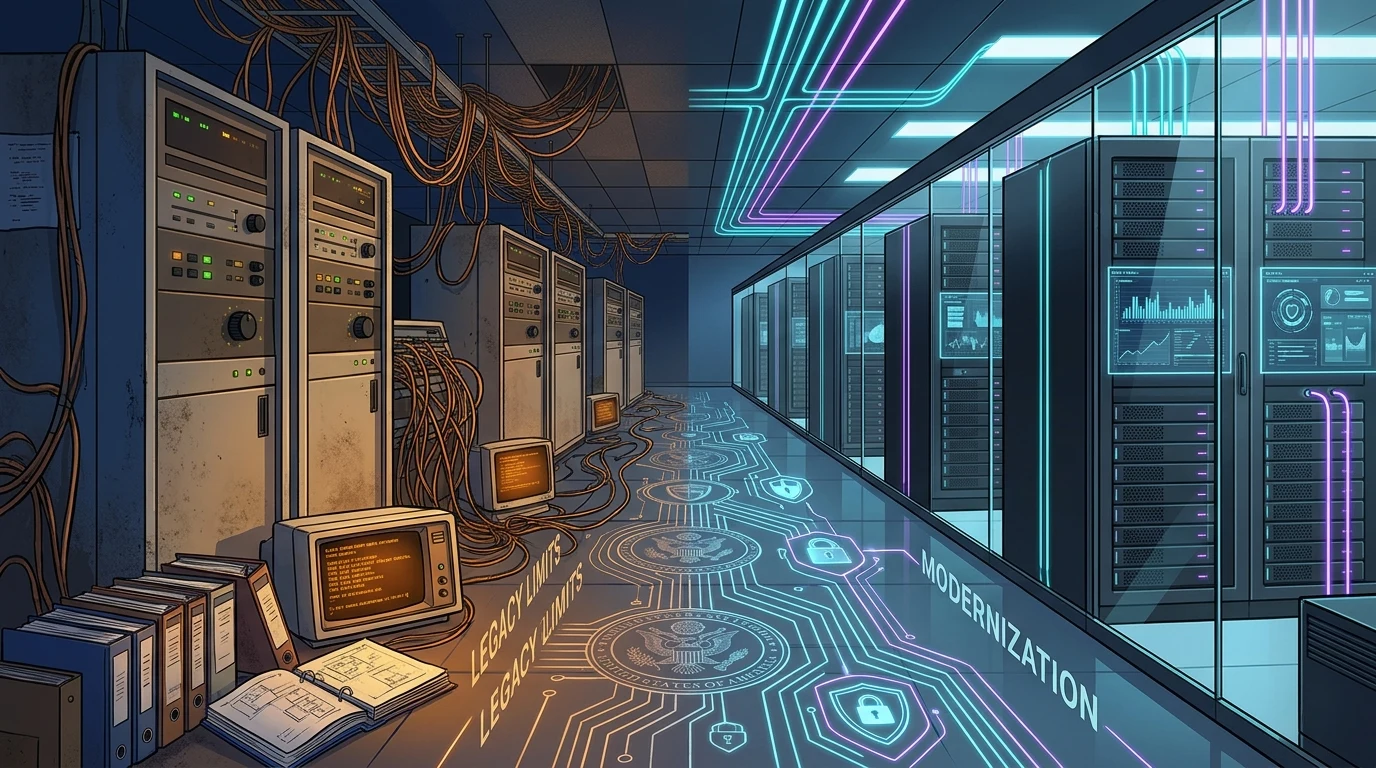
While the United States government allocates over $75 billion annually to civilian and defense information technology procurement, independent audits by the Government Accountability Office (GAO) have repeatedly warned that up to 80% of federal IT budgets are consumed solely by keeping obsolete, vintage computer systems running. In many mission-critical operational facilities, proprietary routing cabinets installed during the 1980s and 1990s remain responsible for passing telemetry and communications between contemporary modern fiber backbones.
"We have engineered an immensely complex, fragile hybrid ecosystem where bleeding-edge artificial intelligence analytics and cloud microservices are forced to interface with legacy hardware that belongs in the Smithsonian," explained a former principal deputy chief information officer for the Department of Defense. "When a routine maintenance script or encrypted protocol update is pushed through routing hardware designed during the Cold War, unexpected memory buffer overruns and cascade failures become almost inevitable."
Contractor Accountability and Sovereign Cloud Standards
The consecutive breakdowns have also intensified scrutiny on multi-billion-dollar defense IT contractors and cloud service providers. Federal procurement officers are examining whether prime defense contractors delivered adequate telemetry monitoring and hot-failover redundancy guarantees mandated under sovereign cloud service-level agreements. Lawmakers are preparing legislative mandates that would penalize federal vendors whose failure to modernize hardware leads to systemic public disruptions.
Furthermore, cybersecurity experts noted that legacy hardware interfaces represent prime attack vectors for sophisticated foreign advanced persistent threat (APT) groups. Vintage communication gateways frequently lack hardware-level encryption and real-time firmware attestation, leaving them vulnerable to subtle firmware tampering and denial-of-service disruptions.
Calls for a Dedicated Federal IT Capital Overhaul
In response to the mounting crises, technology leaders across government and industry are lobbying Congress to create a dedicated, multi-year National Infrastructure Capital Modernization Fund. Unlike annual appropriations that incentivize temporary short-term patches, a dedicated capital fund would allow federal agencies to systematically decommission obsolete mainframe infrastructure and replace it with zero-trust, quantum-resilient optical networks capable of safeguarding American governance for the next half-century.
Editorial Fact Check & Key Findings
Key points
- High-profile network failures highlight the danger of connecting modern cloud services to legacy routing hardware.
- GAO audits show federal agencies spend billions merely sustaining obsolete mainframes.
- Technologists urge Congress to establish a National Digital Infrastructure Modernization Fund.
What the evidence shows
Federal chief information officers and defense technology contractors face mounting scrutiny following consecutive outages at the FAA and NSA, prompting calls for dedicated capital funding to replace decades-old routing equipment.
Background and limits
GAO audits show up to 80% of federal IT budgets maintain obsolete legacy architectures unable to handle modern workloads.
Why this matters
Government Accountability Office (GAO) federal IT modernization findings and DoD cyber posture reviews confirm systemic vulnerabilities.