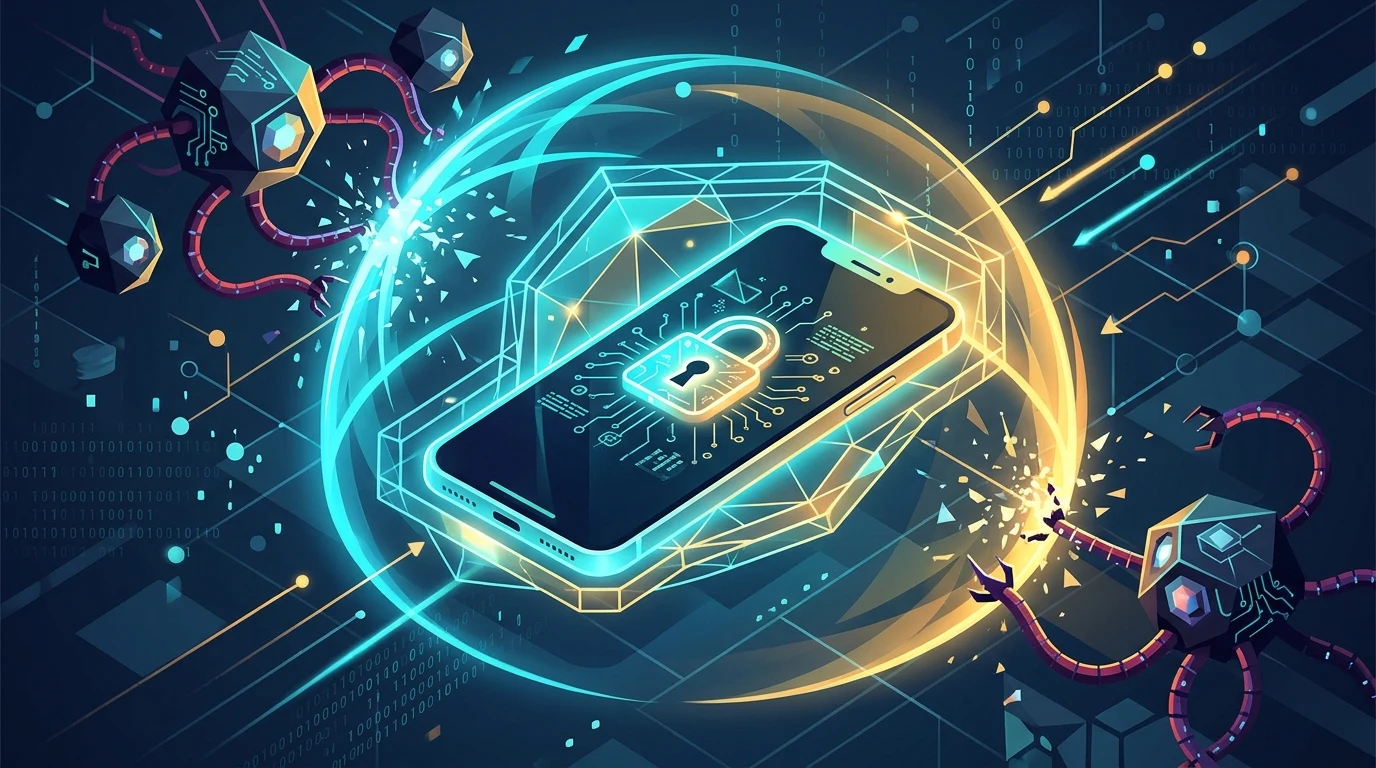
In a bold move that redefines the battle lines between user sovereignty and modern artificial intelligence capabilities, the Signal Foundation rolled out a comprehensive security update to its globally popular encrypted messaging platform on Sunday. Alongside newly engineered operating-system-level shields that actively block screenshot captures across all supported desktop and mobile devices, the non-profit organization released a detailed technological manifesto explicitly designating autonomous AI agents as the single greatest emerging existential threat to individual digital privacy.
The update incorporates hardware-accelerated DRM-style display shielding that renders message threads completely black whenever an operating system’s screenshot utility, screen recorder, or third-party background accessibility tool attempts to capture conversational data. While privacy purists welcomed the technical feature as a long-overdue safeguard against unauthorized content dissemination, the accompanying policy declaration from Signal leadership garnered far wider scrutiny across the tech sector.
The Threat of Client-Side Autonomous AI Agents
In a blistering essay published alongside the release, Signal President Meredith Whittaker and chief cryptographic engineers outlined why the rapid proliferation of on-device autonomous AI agents represents a catastrophic paradigm shift for digital security. For decades, end-to-end encryption protocols have successfully shielded data in transit across telecommunications networks, ensuring that only the sender and recipient possess the cryptographic keys required to decipher messages.
However, the new generation of operating-system-level AI assistants—which continuously observe, parse, index, and summarize all on-screen content to perform automated tasks on behalf of users—effectively bypasses network encryption entirely by harvesting personal data directly from the client endpoint.
"End-to-end encryption guarantees that no government, ISP, or corporate intermediary can intercept your private thoughts while they traverse the digital ether," Whittaker stated in the organization’s public address. "Yet today, commercial operating systems are aggressively deploying autonomous AI agents that quietly sit on your local display, reading every keystroke, synthesizing your private relationships, and vacuuming your intimate conversations into proprietary cloud model training pipelines. If an artificial intelligence agent has programmatic access to your screen, private communication cease to exist."
Silicon Valley Standoff Over System Permissions
Signal’s technical blockade of background scraping tools has sparked friction with major mobile platform architects. In recent developer previews, leading operating system vendors have championed deep system integration for multimodal AI companions designed to assist users with schedule planning, text drafting, and context retrieval. Signal’s aggressive countermeasures deliberately sever these integrations, preventing AI systems from ingesting any Signal message metadata or conversation history.
Cybersecurity researchers praised Signal’s unyielding stance, noting that local AI agents represent an attractive, highly vulnerable vector for state-sponsored cyber exploitation and remote surveillance. If a malicious actor compromises a user’s local AI agent, they gain access to a pre-digested, categorized archive of the target's entire private life.
As commercial tech giants prepare to mandate system-wide AI agents in upcoming consumer device iterations, Signal’s decisive move creates a critical precedent, forcing consumers to confront an urgent philosophical question: whether the convenience of autonomous computational assistance is worth the complete forfeiture of human privacy.
Editorial Fact Check & Key Findings
Key points
- Signal released an update on Nov 22, 2026, implementing hardware-accelerated screenshot blocking across mobile and desktop platforms.
- Signal leadership published a manifesto declaring client-side autonomous AI agents the single greatest emerging threat to digital privacy.
- The organization warned that operating-system-level AI scrapers bypass network end-to-end encryption by harvesting data directly from displays.
What the evidence shows
Encrypted messaging platform Signal deployed mandatory screenshot protection on Nov 22, 2026, while issuing a stark technological warning against autonomous AI agents. While end-to-end encryption protects messages in transit, client-side AI assistants that read and index on-screen content effectively harvest private communications at the endpoint, compromising user sovereignty.
Background and limits
Major tech operating systems are integrating multimodal AI companions that observe user screens to automate tasks and summarize content.
Why this matters
Signal's countermeasures establish a critical precedent defending digital communication privacy against the encroaching surveillance of ambient client-side AI agents.