
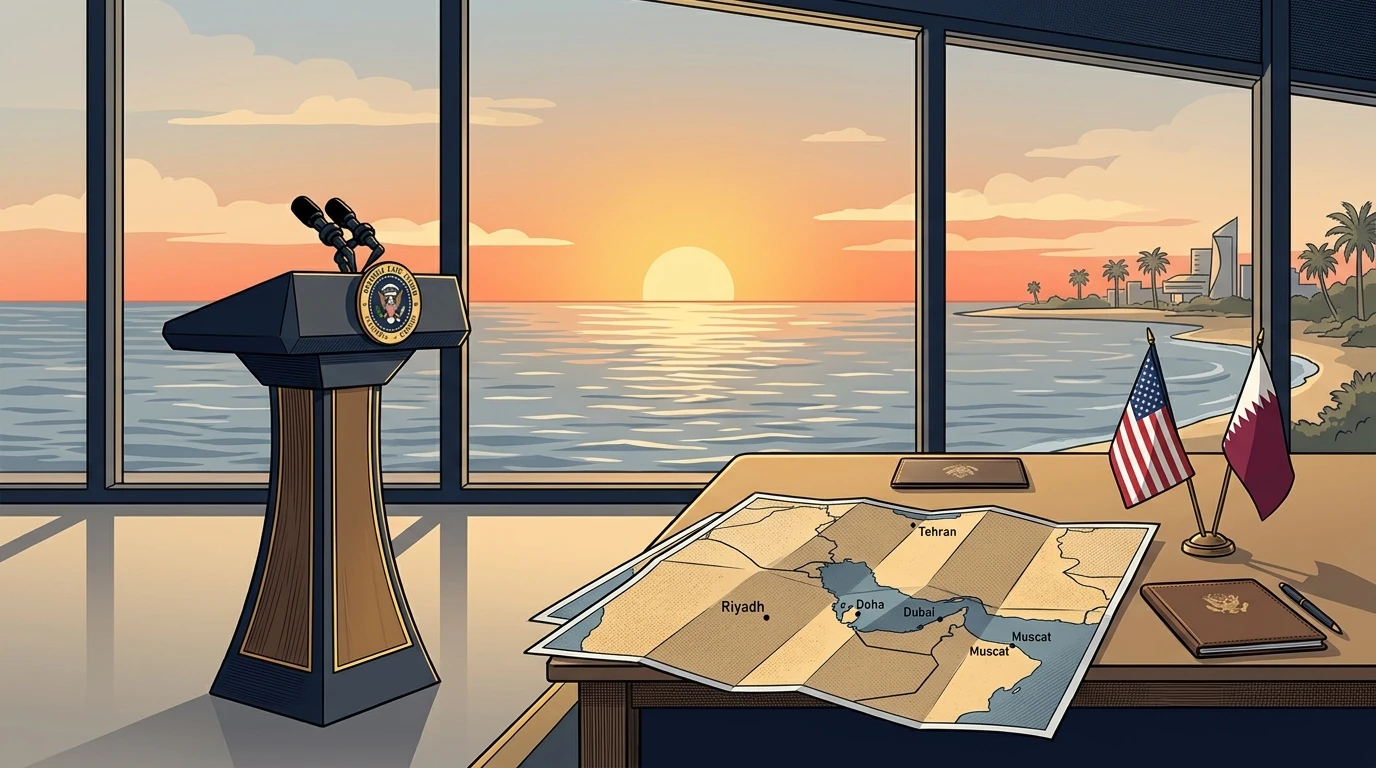
In a dramatic foreign policy pivot that caught Capitol Hill and international allies by surprise, President Donald Trump declared on Monday, November 9, that the eight-month-old military conflict between the United States and Iran is "militarily effectively over." Speaking during an unannounced White House press briefing, the President indicated that sustained airstrikes, naval containment measures, and precision degradation of strategic targets have fulfilled core operational objectives, obviating the need for further offensive escalation at this juncture.
The White House Briefing and Shifting Strategic Calculus
The President’s public declaration marks a profound departure from the hawkish rhetoric that characterized the late summer and autumn campaign cycles. "We believe that it's militarily effectively over. Further large-scale military operations are simply not necessary at this point," President Trump told reporters, while maintaining that the United States retains mapped coordinates for 38 critical infrastructure targets should hostile action resume. The announcement comes directly on the heels of the 2026 midterm elections, in which voter frustration over soaring gasoline prices, elevated shipping insurance, and prolonged overseas military commitments contributed to severe electoral losses for the governing coalition.
National security strategists and regional analysts noted that the White House is seeking an orderly diplomatic resolution before the incoming Democratic-controlled 120th Congress convenes in January with subpoena power and plans to restrict military appropriations. National Security Council officials affirmed that while maritime patrols will remain vigilant in international waters, the administration is prioritizing negotiated off-ramps over protracted attrition warfare.
Qatar Steps In as the Key Diplomatic Intermediary
Central to the diplomatic de-escalation is the Gulf state of Qatar, which has once again assumed its role as the indispensable regional mediator between Washington and Tehran. Diplomatic sources confirmed that the Prime Minister of Qatar conducted extensive consultations in Doha with senior American and regional envoys over the weekend to establish a verifiable de-escalation framework.
The proposed framework outlines reciprocal measures: a formal cessation of long-range drone and missile strikes against commercial shipping corridors in the Persian Gulf and Strait of Hormuz, in exchange for phased releases of frozen humanitarian escrow funds and the suspension of impending unilateral secondary sanctions. While Iranian state media issued cautious responses acknowledging diplomatic contacts, Western diplomats emphasized that a comprehensive, legally binding treaty remains subject to arduous verification protocols.
Congressional Reaction and Bipartisan Scrutiny
On Capitol Hill, the President’s surprise announcement drew divergent reactions across party lines. Hawkish congressional lawmakers warned against relaxing military pressure prematurely, arguing that halting operations without verifiable dismantlements of missile stockpiles amounts to a concession to Tehran. Conversely, incoming Democratic committee chairs welcomed the de-escalation while demanding immediate classified briefings to ascertain the true terms of bilateral agreements negotiated through Qatari channels.
Global financial and energy markets reacted with immediate relief to the de-escalation signal. Benchmark crude futures tumbled more than 4% within hours of the briefing, providing a much-needed reprieve to transport logistics and consumer fuel indices nationwide as Washington navigates the transition toward divided government.
Editorial Fact Check & Key Findings
Key points
- President Trump declared the military phase with Iran effectively concluded.
- Qatar is mediating technical de-escalation protocols regarding the Strait of Hormuz.
- Crude oil benchmarks dropped over 4% following the White House briefing.
What the evidence shows
President Donald Trump stated in a White House press briefing that the conflict with Iran is militarily over, citing accomplished operational objectives and ongoing mediation through Qatar.
Background and limits
The de-escalation announcement followed post-midterm pressure over soaring domestic fuel prices and geopolitical friction.
Why this matters
Official presidential statements and diplomatic engagements document major foreign policy shifts and military disengagements.