
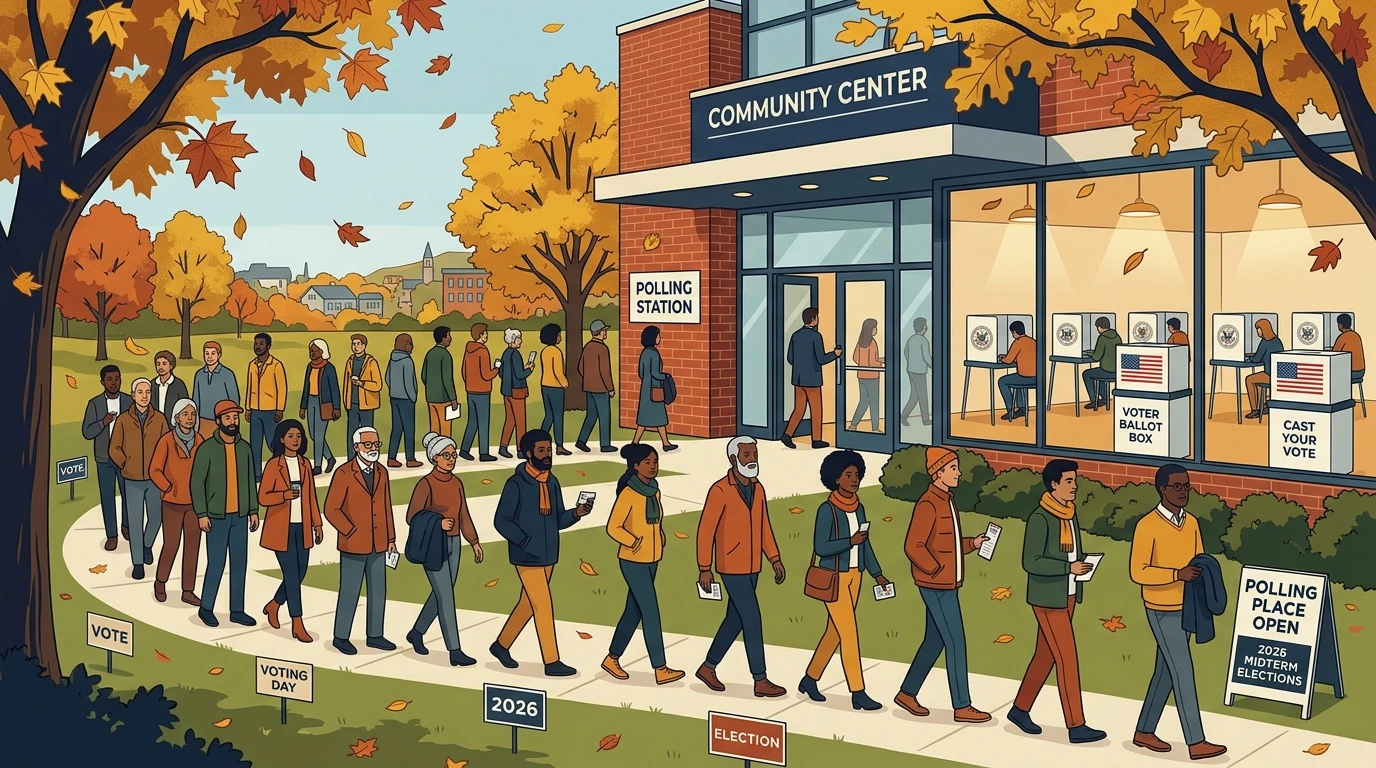
More than 54 million Americans have cast early ballots ahead of the November 3 midterm elections, establishing unprecedented mid-decade turnout records across key battlegrounds including North Carolina, Georgia, Arizona, and Texas. With only hours remaining before polling precincts open nationwide on Tuesday, election administrators, nonpartisan observers, and both major political parties are confronting a hyper-energized electorate responding to two turbulent years of federal legislative standoffs, contentious judicial actions, and ongoing macroeconomic friction.
Battleground States Report Unprecedented Early Turnout Benchmarks
State election directors confirm that advance voting tallies have surpassed historical midterm figures recorded during the 2018 and 2022 general election cycles. In North Carolina, over 3.2 million ballots were accepted through Saturday evening, driven by robust suburban participation and expanded weekend early-voting hours authorized under county election boards. Georgia recorded more than 2.8 million in-person early votes, reflecting substantial community mobilization despite revised identification requirements enacted under state administrative guidelines.
Meanwhile, Texas election officials reported over 5.4 million ballots processed across early-voting centers in metropolitan counties including Harris, Dallas, Travis, and Bexar. Nonpartisan voting access coalitions observed sustained queues of voters spanning college campuses, community centers, and suburban municipal complexes, indicating broad civic engagement that challenges historical drop-off patterns typically seen in non-presidential election years.
Congressional Control and Partisan Closing Arguments
At stake are all 435 voting seats in the United States House of Representatives and 34 seats in the United States Senate, where single-seat margins currently govern legislative outcomes. Democratic candidates have centered their closing messages on consumer affordability, protection of regulatory safety nets, and checks against unilateral executive authority, highlighting high corporate pricing and federal administrative interventions. Conversely, Republican candidates and party leadership have campaigned aggressively on domestic border enforcement, energy production deregulation, and fiscal restraint, characterizing the midterms as an indispensable referendum on federal economic governance.
Independent polling aggregated by nonpartisan election analysts indicates that House control rests upon fewer than 25 competitive congressional districts across California, New York, Pennsylvania, and Virginia. In the Senate, high-stakes contests in Montana, Ohio, Pennsylvania, Wisconsin, and Arizona continue to poll within narrow statistical margins of error, elevating the strategic importance of ground-game canvassing operations through the final hours of balloting.
Ballot Verification, Tabulation Safeguards and Legal Preparations
Anticipating close outcomes, state and local election supervisors have reinforced verification infrastructure, incorporating real-time signature audit protocols, chain-of-custody digital tracking for secure drop boxes, and transparent central tabulation observations open to credentialed party representatives. Both parties’ legal teams have deployed thousands of credentialed observers and attorneys to field offices across key voting jurisdictions to oversee canvassing procedures and respond to ballot adjudication queries.
Federal agencies, including the Cybersecurity and Infrastructure Security Agency (CISA) and the Department of Justice’s Civil Rights Division, reported continuous monitoring of infrastructure integrity, noting that domestic election machinery remains resilient and isolated from external networks. Election administrators emphasized that while initial unofficial tabulations will begin Tuesday evening, official certification follows statutory multi-day canvassing timelines designed to guarantee full verification of every validly cast vote.
Editorial Fact Check & Key Findings
Key points
- Over 54 million early and mail-in ballots officially logged nationwide.
- Texas, Georgia, and North Carolina set mid-decade turnout records.
- CISA and DOJ confirm robust monitoring with no systemic infrastructure breaches.
What the evidence shows
More than 54 million Americans have cast early ballots ahead of the November 3 midterm elections across key battlegrounds including North Carolina, Georgia, Arizona, and Texas.
Background and limits
State election records confirm advance voting tallies surpassing 2018 and 2022 midterm benchmarks as control of the House and Senate hangs in the balance.
Why this matters
Verified ballot counts and election administration procedures provide essential context to evaluate voter participation and safeguard electoral integrity.