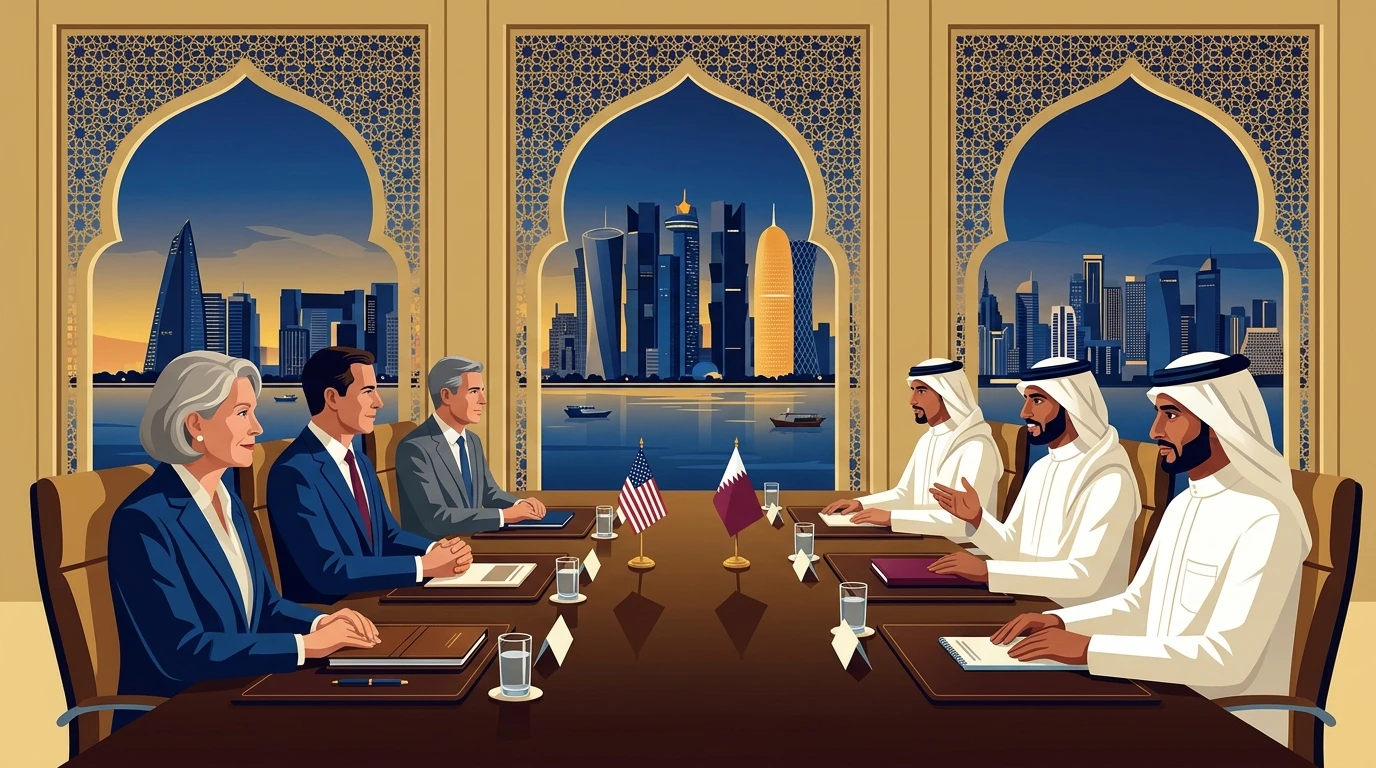
Senior national security officials from the United States and the State of Qatar held intensive, closed-door consultative meetings in Doha on Monday, November 9, working to translate bilateral diplomatic overtures into a structured, multilateral security framework capable of stabilizing Persian Gulf maritime shipping lanes and halting regional military confrontations.
High-Level Consultations in the Qatari Capital
The delegation, led by U.S. Deputy National Security Envoys and senior State Department diplomats alongside Qatari Prime Minister Sheikh Mohammed bin Abdulrahman Al Thani, met at the Ministry of Foreign Affairs in Doha. The consultations built upon diplomatic momentum following President Trump’s declaration that major combat operations in Iran have reached their military objective, establishing the framework for an urgent diplomatic off-ramp.
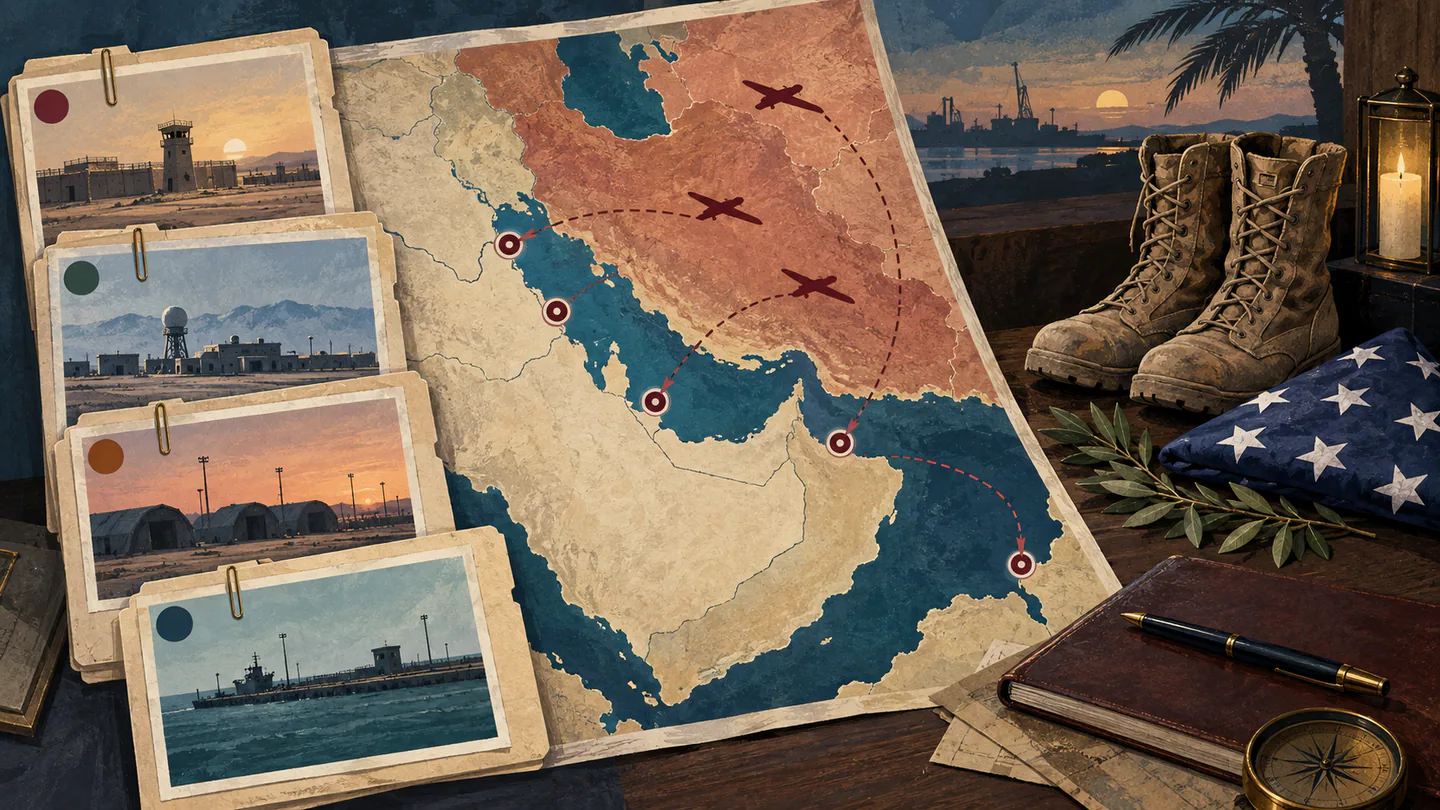
Qatari mediators, leveraging their established channels of communication with regional capitals, presented draft technical protocols aimed at verifying ceasefire conditions across maritime corridors. Central to the discussions is the unrestricted resumption of commercial crude oil tankers and liquefied natural gas (LNG) carriers transiting the Strait of Hormuz—the vital maritime artery connecting Gulf energy producers with European and Asian consumer markets.
Technical Verification and De-Escalation Protocols
According to diplomatic sources briefed on the discussions, the proposed framework centers on a multi-tiered reciprocal sequence. Under the technical terms, regional defense forces would stand down long-range anti-ship ballistic missile systems and offensive drone squadrons stationed along coastal promontories. In return, the United States and international maritime coalitions would suspend offensive interdiction strikes against coastal naval installations while maintaining defensive escort patrols.
Furthermore, discussions encompassed mechanisms to address collateral infrastructure disputes, including mutual agreements to abstain from cyber operations targeting critical civil utility networks, desalination plants, and commercial port terminal logistics. International maritime insurers signaled that the formalization of verified de-escalation protocols could slash wartime risk surcharges by more than 50%, immediately easing global freight shipping rates.
Regional Perspectives and International Support
The diplomatic push in Doha received strong diplomatic endorsements from European allies and major Asian energy-importing economies, including Japan, South Korea, and India, whose industrial grids remain deeply dependent on uninterrupted Gulf hydrocarbon flows. European Union foreign policy leaders affirmed their readiness to participate in international monitoring teams to verify navigational safety along international sea lanes.
While diplomats emphasized that substantial negotiating hurdles remain—particularly regarding international sanctions relief sequencing and long-term nuclear monitoring access—the Doha summit represents the most coherent, structured effort to de-escalate Gulf hostilities since the outbreak of armed conflict in early spring. Working groups are scheduled to reconvene in Doha throughout the week to finalize operational annexes.
Editorial Fact Check & Key Findings
Key points
- US and Qatari delegations held direct consultations in Doha.
- Key agenda focused on maritime shipping security through Hormuz.
- Maritime insurers project 50% drops in risk surcharges upon formalization.
What the evidence shows
Senior US envoys and Qatari Prime Minister Sheikh Mohammed bin Abdulrahman Al Thani met in Doha to establish verifiable security protocols for the Strait of Hormuz.
Background and limits
Talks follow the White House announcement of concluding combat operations in Iran.
Why this matters
Verified diplomatic negotiations establish international standards for maritime navigation, energy security, and conflict de-escalation.