
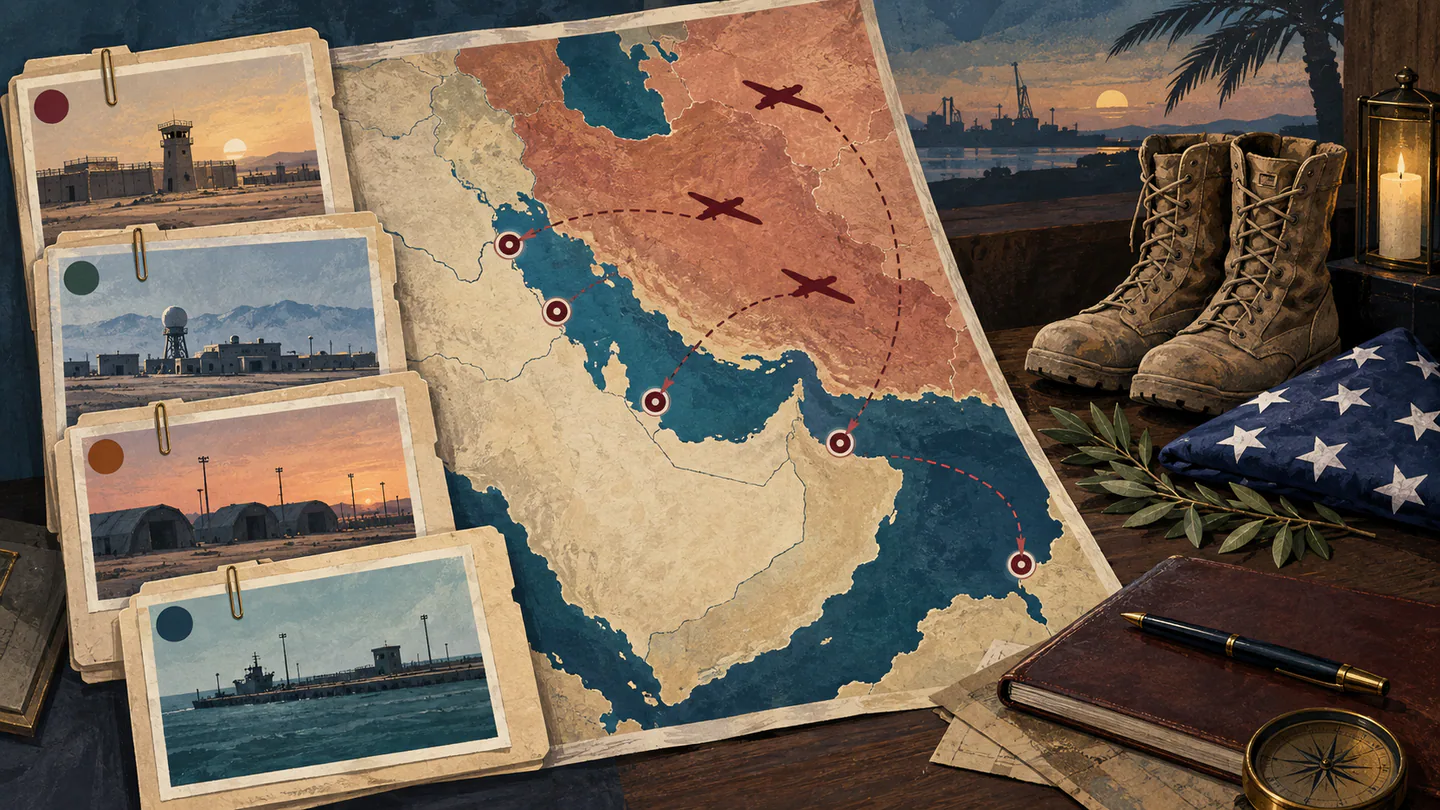
Four United States service members were killed and seven others wounded during a sophisticated, multi-drone strike on a coalition military outpost in the Persian Gulf, the Department of Defense confirmed in a somber announcement. The lethal attack marks the deadliest single engagement for American armed forces in the region since the onset of intensified hostilities with Iranian-backed militia networks.
According to Central Command officials, the attacking force utilized advanced, radar-evading loitering munitions that flew at ultra-low altitudes to circumvent regional air defense radar arrays. One of the drones penetrated the compound’s perimeter and detonated against a hardened living quarter while service personnel were resting, causing catastrophic structural collapse and widespread shrapnel damage.
Emergency Medical Evacuations and Pentagon Response
Emergency medical personnel worked under intense threat conditions to stabilize the wounded before evacuating critically injured troops to Landstuhl Regional Medical Center in Germany for advanced surgical care. The Pentagon stated that the identities of the deceased service members are being withheld pending formal notification of their next of kin in accordance with standard military protocols.
Defense Secretary Pete Hegseth convened an emergency meeting of the Joint Chiefs of Staff and national security leadership at the Pentagon, delivering a stern warning that the United States will respond at a time, place, and manner of its choosing. Military analysts anticipate targeted retaliatory strikes against drone manufacturing facilities, command depots, and proxy leadership compounds across the regional theater.
Diplomatic Shockwaves and Heightened Maritime Security
The lethal strike sent immediate geopolitical shockwaves through regional diplomatic channels and global commodities markets. Oil prices surged over four percent on international exchanges amid escalating fears that direct military exchanges could expand to commercial shipping lanes, offshore oil terminals, and international naval escorts in the Strait of Hormuz.
Allied governments in the Gulf region placed their own military and critical infrastructure on maximum alert, calling for urgent diplomatic intervention to prevent an uncontrollable regional conflagration. On Capitol Hill, lawmakers offered condolences to the families of the fallen while renewing contentious debates regarding the broader strategic posture of American forces deployed in contested Middle Eastern theaters.
Editorial Fact Check & Key Findings
Key points
- The deaths did not all occur in one strike.
- Jordan and Iraq incidents were reported separately.
- Official casualty totals can be revised as investigations continue.
What the evidence shows
Two US service members were initially confirmed killed after a missile and drone attack on a base in Jordan, with another listed as missing. A separate service member later died during an operation involving a downed Iranian drone in Iraq.
Background and limits
Official totals changed as the military identified personnel and investigated separate events. Reporting should attribute each casualty to the incident confirmed by the Defense Department rather than combining them into a single attack.
Why this matters
Accuracy is especially important when naming deaths in war. It respects families and avoids turning an evolving official record into a simplified narrative.