Commercial maritime transportation through the strategic waterways of the Middle East encountered severe operational friction on Monday, as compounding regional economic crises inside Iran spilled into vital shipping choke points across the Persian Gulf, the Strait of Hormuz, and the Gulf of Oman. The escalating logistical bottlenecks arrived as international maritime insurance syndicates sharply escalated war-risk premiums for international tankers transiting regional waters.
According to maritime tracking data and reports from regional shipping registries, commercial transit queues lengthened significantly outside key transshipment ports. The maritime slowdown was precipitated by widespread domestic labor strikes and fuel distribution blockades across major Iranian transportation hubs, where truck drivers and refinery technicians halted operations to protest severe fuel rationing, double-digit currency inflation, and delayed wage disbursements.
Drone Threats and Naval Alert Postures
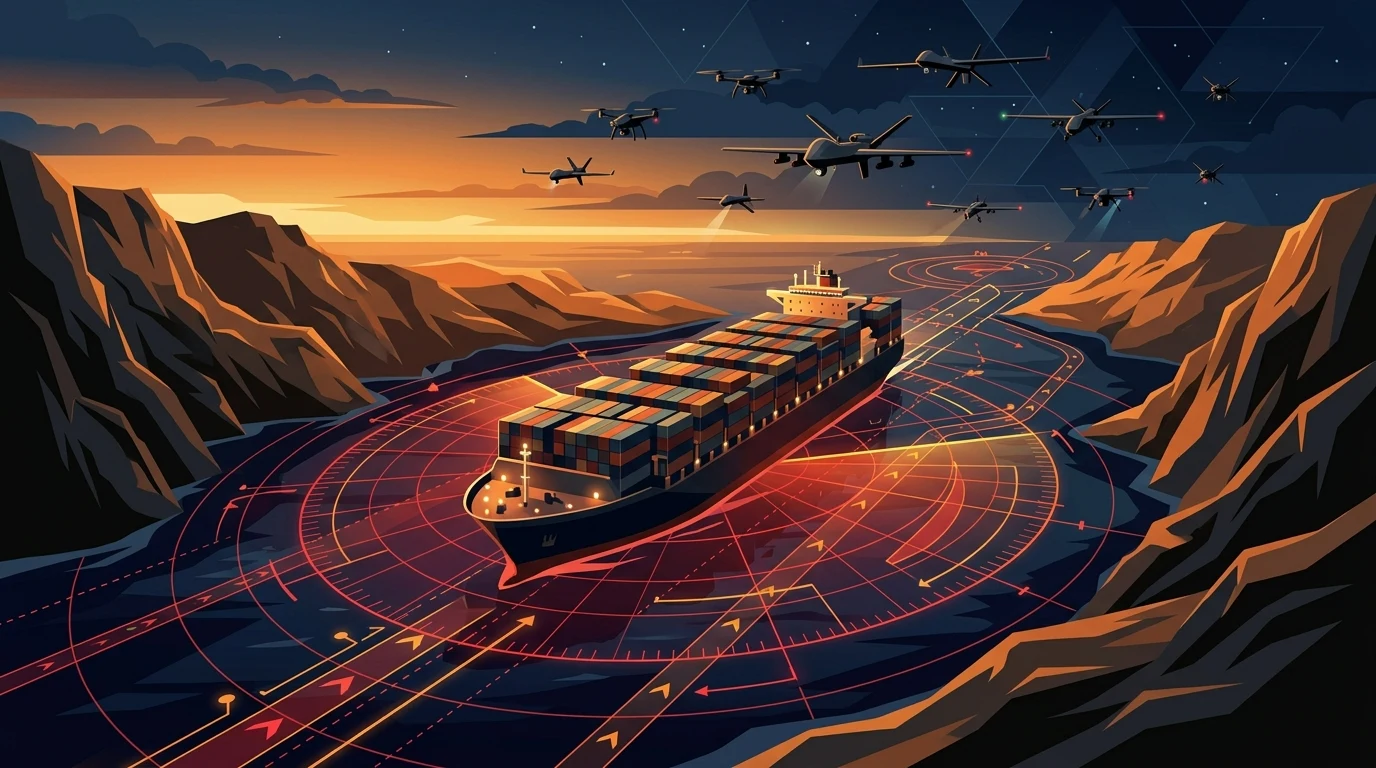
The economic paralysis on land was mirrored by acute security anxieties at sea. Regional naval commands—including the U.S. Fifth Fleet and allied European maritime surveillance task forces—maintained maximum alert postures following a wave of uncrewed aerial vehicle (UAV) and explosive drone reconnaissance flights tracked over international shipping lanes over the preceding forty-eight hours.
U.S. diplomatic outposts across the Gulf Cooperation Council (GCC) states reiterated security warnings first issued over the weekend, advising commercial maritime operators to implement hardened watch rotations, maintain high-speed transits through narrow navigation channels, and strictly adhere to international convoy corridors.
"The convergence of domestic civil volatility on the coastline and aggressive proxy drone posturing in international waters creates an extraordinarily delicate operating environment for merchant mariners," said a senior maritime security analyst in Dubai. "Commercial ship captains are exercising extreme caution, altering established courses, and delaying bunkering stops, which compounds regional logistics delays and introduces significant cost volatility into global energy supply chains."
Global Energy Market Reactions
International commodity markets reacted with immediate sensitivity to the heightened logistical friction. Benchmark Brent crude oil futures climbed 2.4% during Monday trading in London, while marine fuel bunkering rates in Singapore and Fujairah spiked to cyclical highs as vessel operators scrambled to secure verified fuel reserves ahead of anticipated regional disruptions.
Diplomatic envoys in Geneva and Vienna cautioned that prolonged maritime uncertainty risks accelerating broader geopolitical miscalculations. While regional authorities maintain that primary shipping channels remain legally open to innocent passage under international maritime conventions, the physical presence of automated loitering munitions and naval escort frigates has transformed ordinary commercial trade into a high-stakes geopolitical maneuvering zone.
With multilateral defense consultations scheduled to convene in Bahrain later this week, allied governments reaffirmed their commitment to preserving the unimpeded flow of international commerce, even as maritime operators brace for prolonged volatility across the world's most critical energy transit arterial.
Editorial Fact Check & Key Findings
Key points
- Maritime logistics through the Persian Gulf and Strait of Hormuz faced severe bottlenecks on Monday, Nov 23, 2026.
- Domestic labor strikes and fuel rationing in Iran disrupted regional shipping logistics hubs.
- U.S. Fifth Fleet and allied naval commands maintained maximum alert following tracked loitering drone reconnaissance.
What the evidence shows
Shipping lanes across the Middle East encountered mounting disruptions on Nov 23, 2026, as domestic fuel strikes in Iran collided with heightened naval defense alerts against drone swarms. International shipping syndicates raised war-risk insurance premiums as crude oil futures rose 2.4%.
Background and limits
The friction follows ongoing regional proxy tensions and economic blockades impacting commercial transit routes.
Why this matters
Highlighting the acute sensitivity of global energy supply chains to overlapping domestic unrest and automated naval drone threats.