
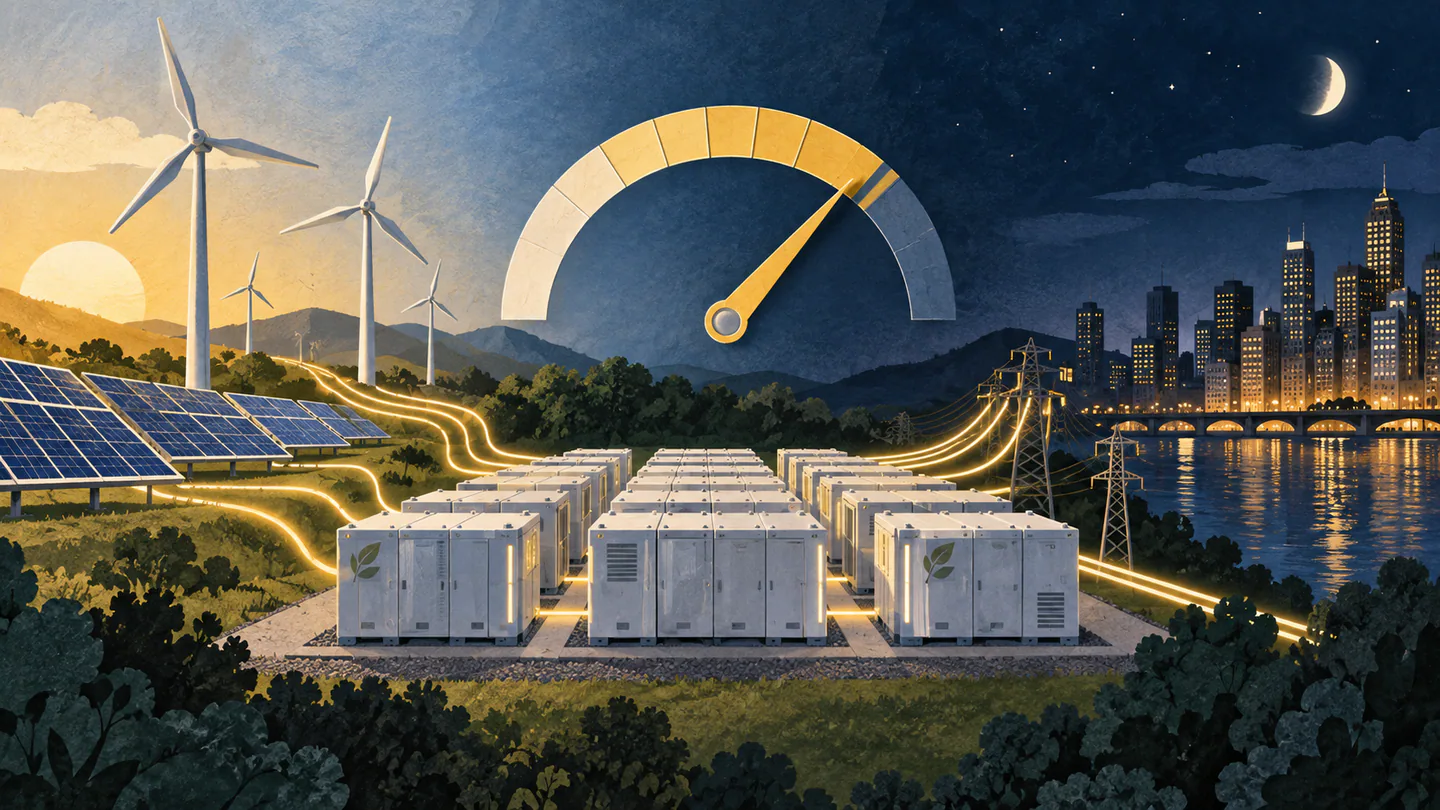
The United States energy grid achieved a transformative milestone in the first quarter of 2026, with cumulative operational grid-scale battery storage capacity officially surpassing 100 gigawatt-hours (GWh), according to comprehensive data published by the Energy Information Administration (EIA) and the American Clean Power Association. The rapid expansion represents a nearly threefold increase compared to capacity levels documented just two years prior.
The unprecedented surge in storage deployment has been fueled by massive utility-scale solar installations across the Sun Belt, substantial federal clean energy tax credits, and plummeting prices for next-generation lithium iron phosphate (LFP) and sodium-ion battery cells. Large-scale battery arrays now regularly store surplus midday photovoltaic generation, discharging clean electricity during evening peak demand periods and stabilizing regional distribution networks.
Stabilizing Regional Grids and Phasing Out Peaker Plants
The operational value of the 100 GWh storage milestone was demonstrated vividly during recent record heat waves in Texas, California, and Arizona. In past decades, sudden spikes in residential air conditioning demand forced grid operators to fire up expensive and heavily polluting fossil-fuel peaker plants, frequently triggering wholesale electricity price spikes or rolling brownouts.
During the recent Q1 demand peaks, battery storage systems successfully supplied up to 24 percent of peak evening power in California’s CAISO territory and provided crucial rapid-response frequency regulation in Texas’s ERCOT market. Utility executives noted that batteries responded in milliseconds to balance sudden voltage fluctuations, preventing localized blackouts without burning additional natural gas.
Supply Chain Resilience and the Path to 250 GWh by 2030
While industry leaders celebrated the achievement, energy analysts emphasized that sustained grid decarbonization will require overcoming critical supply chain and interconnection obstacles. Thousands of planned storage and solar projects remain trapped in regional interconnection queues, waiting years for transmission study approvals and substation upgrades.
Furthermore, domestic manufacturing of critical battery components continues to scale up under federal domestic content mandates, reducing reliance on overseas mineral refining. With major battery gigafactories coming online across Georgia, North Carolina, and Michigan, industry projections forecast that total US battery storage could comfortably surpass 250 GWh before the decade concludes.
Editorial Fact Check & Key Findings
Key points
- US utility-scale battery power capacity was nearly 52 GW by June.
- 8.3 GW was added during the first half of 2026.
- GW and GWh describe different properties.
What the evidence shows
The Energy Information Administration reported 43.6 gigawatts of operational utility-scale battery storage at the end of 2025. Operators added 8.3 GW in the first half of 2026, bringing nameplate power capacity to nearly 52 GW.
Background and limits
Gigawatts measure instantaneous power; gigawatt-hours measure how much energy a system can deliver over time. They are not interchangeable. The original “100 GWh in Q1” claim cannot be compared directly with EIA’s GW capacity series.
Why this matters
Correct units help readers understand grid capability. A battery fleet’s usefulness depends on both power rating and duration, as well as where it is connected.