
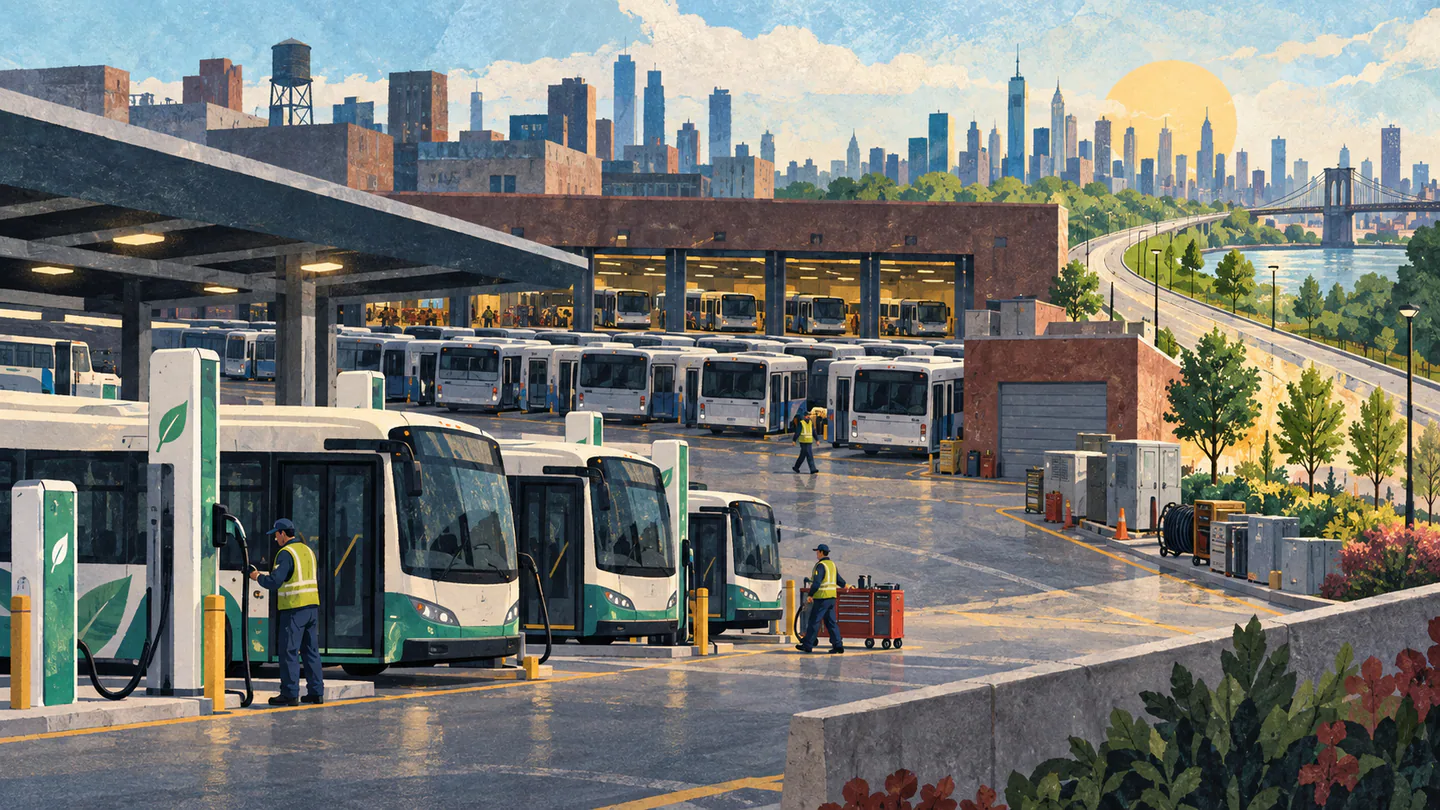
New York City officially inaugurated the Western Hemisphere’s largest municipal fleet of zero-emission electric transit buses, deploying 1,200 state-of-the-art battery-electric buses across all five boroughs. The landmark transit initiative, spearheaded by the Metropolitan Transportation Authority (MTA) in partnership with the New York City Department of Transportation, marks a colossal step toward the complete decarbonization of the city's vast public transit network.
The new electric fleet replaces aging diesel-powered buses that have operated across heavily congested transit corridors for decades. Fitted with high-capacity lithium iron phosphate battery packs, the buses deliver an operational range of over 200 miles on a single charge, capable of enduring full-day service cycles even amidst punishing winter temperatures and heavy stop-and-go Manhattan traffic.
Transforming Bus Depots into High-Power Charging Hubs
Deploying 1,200 electric buses demanded a massive modernization of the city's physical electrical infrastructure. The MTA completed the transformation of seven major bus depots into hyper-scale charging terminals, installing overhead pantograph fast-chargers capable of replenishing bus battery reserves in under 90 minutes.
The depots are equipped with advanced energy management software that coordinates charging schedules with regional grid operators. By drawing electricity during overnight off-peak demand hours and utilizing onsite utility-scale battery buffers, the transit system avoids placing excessive stress on the municipal electrical grid during peak afternoon hours.
Environmental Justice and Dramatic Air Quality Improvements
The initial phase of the electric bus rollout was deliberately prioritized along routes traversing historically underserved communities in the South Bronx, Central Brooklyn, and Upper Manhattan. These neighborhoods have long suffered from disproportionately high rates of childhood asthma and cardiovascular illnesses linked directly to diesel exhaust and heavy truck traffic.
Environmental health researchers estimate that retiring the 1,200 diesel buses will eliminate over 150,000 metric tons of greenhouse gas emissions annually, while drastically reducing dangerous particulate matter (PM2.5) and nitrogen oxide emissions along dense residential street corridors. Transit advocates and urban planners worldwide are viewing New York’s ambitious electrification program as a definitive case study for global megacity sustainability.
Editorial Fact Check & Key Findings
Key points
- Total fleet: about 5,780 buses.
- Zero-emission target: 2040.
- The fleet is not currently all-electric.
What the evidence shows
The combined MTA bus fleet had about 5,780 vehicles in March 2026. The agency’s long-term goal is a zero-emission fleet by 2040, supported by bus purchases and depot-charging upgrades.
Background and limits
A state comptroller audit found that early battery-electric procurement and infrastructure work were behind the scale implied by the original article. The MTA’s fleet size is a strength, but it does not make the current electric subset the largest fully electric fleet in the Western Hemisphere.
Why this matters
Transit electrification depends on vehicle reliability, charging, depot construction, workforce training and funding. Counting announced orders as buses in service masks those constraints.