
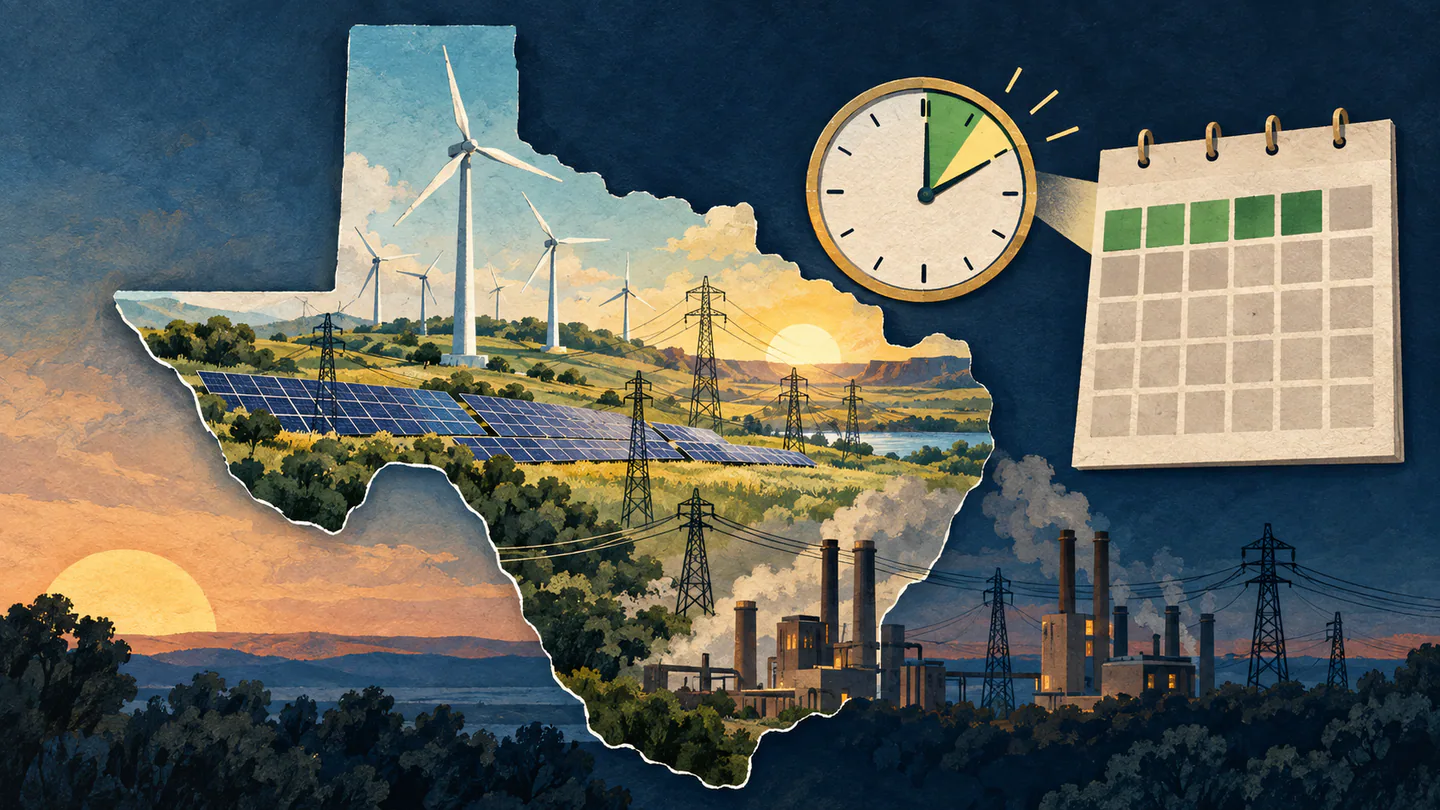
Texas achieved an extraordinary clean energy milestone by operating its electric grid entirely on renewable energy sources for a full 30-day period, disproving longstanding skepticism regarding the reliability of wind and solar power in heavy-industrial economies. Data confirmed by the Electric Reliability Council of Texas (ERCOT) revealed that a potent combination of utility-scale solar, expansive West Texas wind farms, and utility battery storage supplied 100 percent of the state’s electricity demand throughout the month.
The historic feat was made possible by continuous windy conditions across the Panhandle, intense spring sunshine throughout Central and South Texas, and the rapid commissioning of over 15 gigawatts of new grid-scale battery storage over the past eighteen months. During midday hours, clean energy generation frequently exceeded total statewide demand, allowing ERCOT operators to store excess power in regional battery reserves for use during evening hours.
Economic Dividends and Collapsing Wholesale Power Prices
The 30-day all-renewable milestone delivered tangible economic benefits to Texas consumers and commercial businesses. Wholesale electricity prices during the period plummeted to near-zero levels during peak afternoon solar generation, resulting in significant savings for industrial manufacturing plants, data centers, and petrochemical complexes operating under dynamic electricity tariffs.
Landowners in rural West Texas and the Panhandle reported record royalty payments from utility wind and solar leases, revitalizing municipal tax bases and funding local school districts. Energy economists noted that Texas’s deregulated energy market and streamlined permitting process have enabled clean energy developers to build and connect projects far faster than in heavily regulated coastal markets.
Grid Modernization and the Challenges of Long-Distance Transmission
Despite the operational triumph, grid engineers highlighted significant physical bottlenecks that must be resolved to sustain and expand clean energy penetration. West Texas wind and solar farms frequently faced curtailment due to transmission congestion, as existing high-voltage power lines struggled to transport massive quantities of clean power to surging population centers in Dallas, Houston, and Austin.
State legislators and ERCOT executives are now reviewing plans for a multi-billion-dollar expansion of the state’s transmission superhighway, including new 765-kilovolt transmission corridors and interregional interconnections. As corporate power demand from artificial intelligence data centers and industrial electrification accelerates, Texas’s energy transition continues to set an ambitious national benchmark.
Editorial Fact Check & Key Findings
Key points
- Texas renewable output continues to grow.
- ERCOT still uses a mixed generation fleet.
- No official ERCOT record supports a full 100% renewable month.
What the evidence shows
Texas continues to lead the United States in wind generation and has rapidly added solar and battery capacity. That growth has produced hours when renewables supplied an unusually high share of demand.
Background and limits
An entire month of 100% renewable electricity would require every interval in the period to be covered by renewable generation and storage. ERCOT’s public fuel-mix data show conventional generation remained part of the system.
Why this matters
Hourly records are meaningful, but they are not the same as continuous monthly operation. Clear time intervals make energy reporting more useful and prevent a real transition from being exaggerated.