
A profound restructuring of the American K-12 educational landscape gained dramatic momentum on Sunday, as newly released enrollment registries revealed an explosive surge in state-funded educational voucher redemptions fueling the rapid proliferation of artificial intelligence-driven micro-schools and specialized athletic academies across Texas, Florida, Arizona, and the broader Sunbelt region.
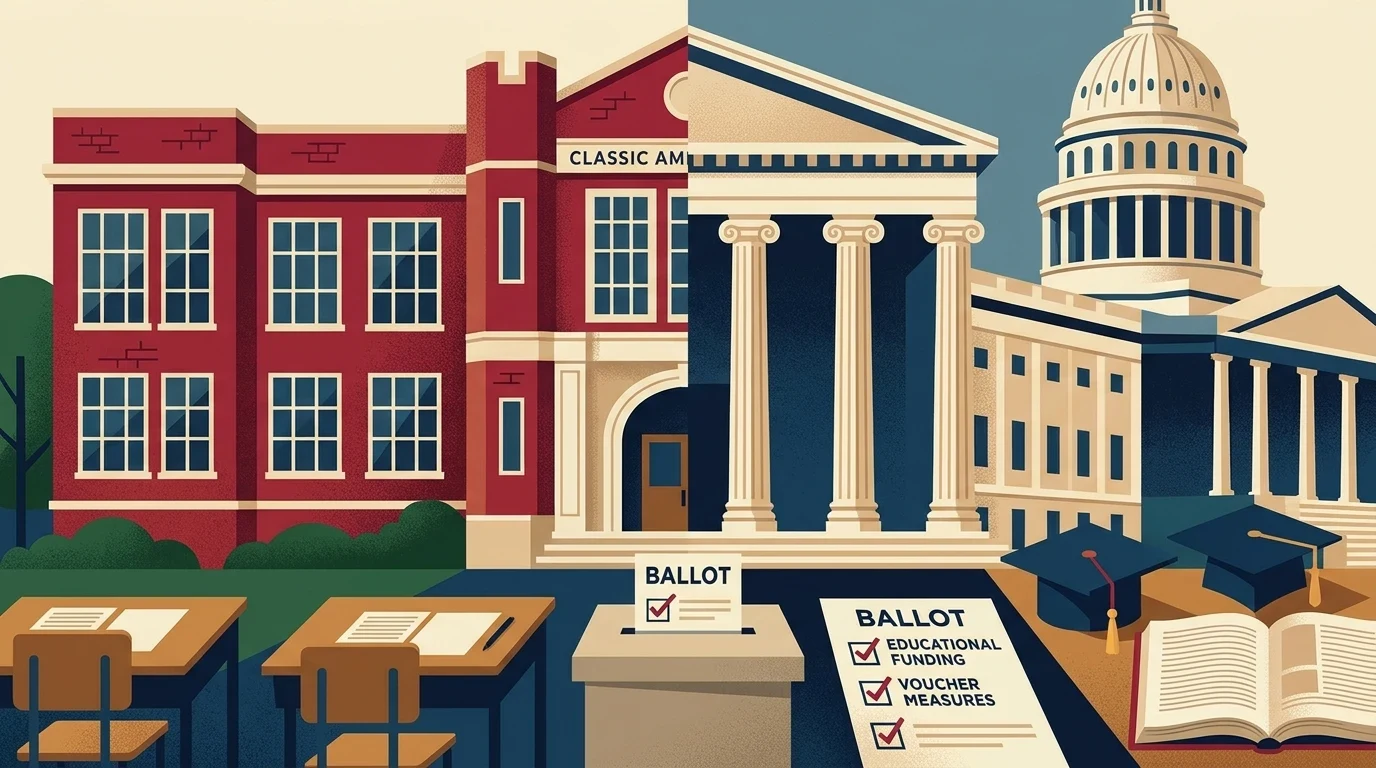
The acceleration stems directly from universal school-choice legislation enacted across several conservative state legislatures over the past two sessions. By granting families universal Education Savings Accounts (ESAs)—often providing between $8,000 and $10,500 in state taxpayer funds per child annually to apply toward private tuition or alternative educational services—the policies have created a multi-billion-dollar commercial market for novel schooling models operating outside traditional public school district frameworks.
The Rise of the Two-Hour AI Academic Day
At the center of the micro-school boom are venture-backed, tech-forward educational networks, such as the Alpha School ecosystem and the newly expanded Texas Sports Academy. These modern institutions invert traditional six-hour classroom schedules by utilizing proprietary adaptive AI tutoring platforms. Students complete standardized core academic competencies—including mathematics, language arts, and scientific literacy—in two hours of intensive, self-paced algorithmic instruction each morning.
The remaining four to five hours of the school day are dedicated to specialized extracurricular pursuits: elite sports training, competitive gymnastics, tennis, soccer academies, robotics engineering, or vocational apprenticeships. Because AI software dynamically diagnoses learning gaps and adjusts problem difficulty in real time, founders claim students master curriculum benchmarks at twice the speed of conventional lecture-based classrooms while freeing substantial time for physical development and passion projects.
"Traditional industrial-era schooling models force thirty children to sit in uniform desks listening to a standardized lecture at the exact same pace," said the chief academic officer of a Sunbelt micro-school network. "State-backed voucher frameworks have finally given parents the financial agency to choose tailored educational models where technology handles foundational mastery efficiently, leaving children free to cultivate exceptional athletic, artistic, and social talents."
Equity Concerns and Public School Funding Debates
While participating families and edtech investors celebrated the flexibility of the micro-school model, public education advocates, teachers' unions, and civil rights organizations sounded severe alarms regarding the systemic impact on public school districts. Because state funding follows the student, traditional public school systems in Dallas, Houston, Phoenix, and Miami have experienced significant budget contractions, prompting program consolidations, staff reductions, and school closures.
Critics also pointed out that while universal vouchers cover baseline tuition at basic micro-schools, elite athletic academies frequently charge supplemental fees exceeding $15,000 to $25,000 annually for specialized coaching and travel teams, effectively creating a two-tier system where affluent families receive public subsidies for elite private training while lower-income students remain in under-resourced public schools.
Furthermore, education policy researchers raised questions regarding the long-term cognitive and social outcomes of heavy algorithmic learning. While short-term standardized test scores have demonstrated competence in procedural mathematics, researchers stress that human teacher mentorship, collaborative civic debate, and unstructured social interactions are essential to adolescent emotional development. As state legislative sessions convene in early 2027, the battle over voucher accountability, teacher credentialing standards, and the algorithmic future of American schooling is poised to dominate statehouse agendas nationwide.
Editorial Fact Check & Key Findings
Key points
- Enrollment data on Nov 22, 2026, showed rapid expansion of state-funded voucher redemptions for AI micro-schools across Sunbelt states.
- New schooling models condense standardized academics into two hours of adaptive AI tutoring, dedicating afternoons to elite sports training.
- Public school districts in Texas and Arizona reported budget contractions as state Education Savings Account funds flowed to private operators.
What the evidence shows
Universal school choice legislation across Sunbelt states has sparked a private education boom, accelerating the adoption of micro-schools combining AI adaptive learning with elite athletics. While families praise the flexibility and rapid curriculum mastery, public education advocates warn of deep budget cuts to traditional school districts and emerging educational inequality.
Background and limits
State programs provide $8,000 to $10,500 annually per child, creating a multi-billion-dollar commercial market for alternative schooling.
Why this matters
The trend marks a structural shift in American K-12 schooling, redefining the intersection of artificial intelligence, state funding, and athletic development.