
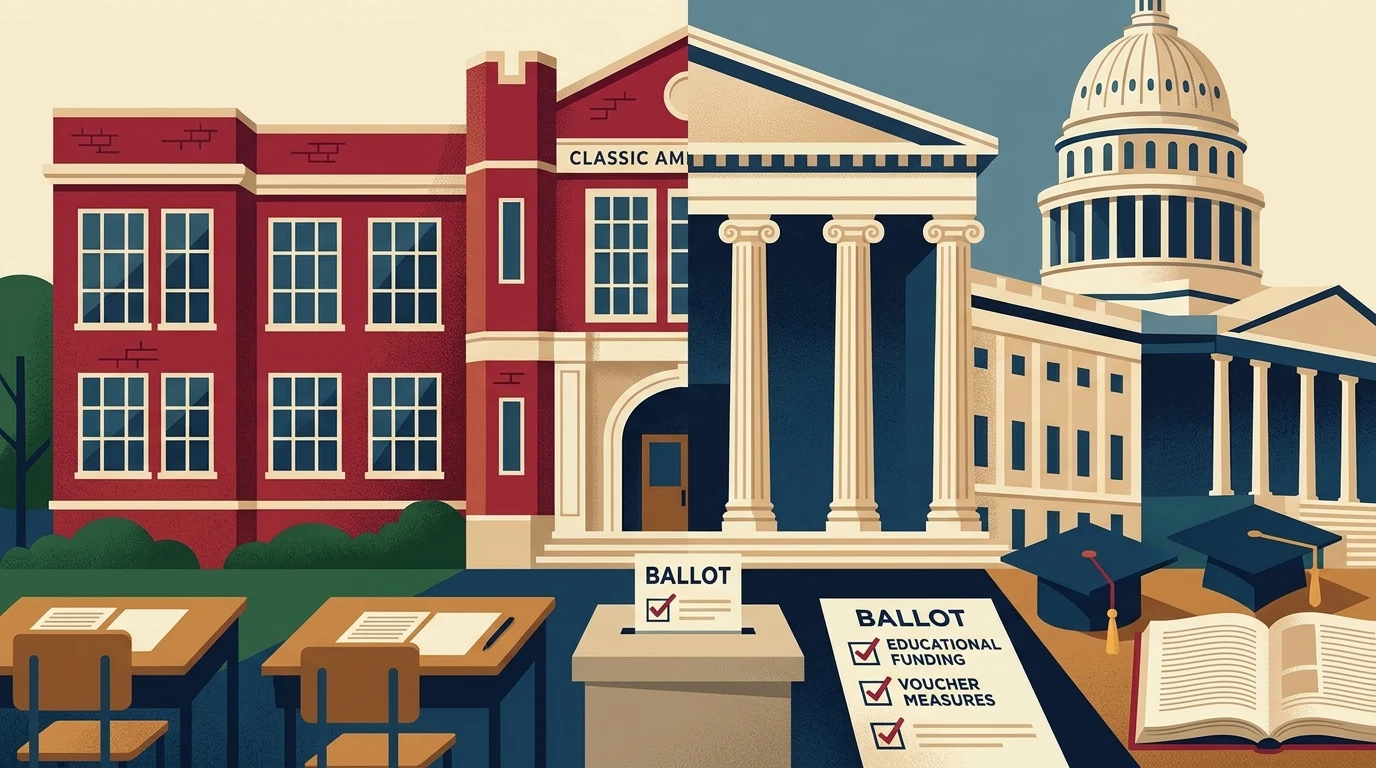
The sweeping midterm elections of November 2026 delivered an abrupt policy shock to the American educational landscape over the weekend, effectively halting the nationwide momentum for universal private school voucher programs while laying the groundwork for intense congressional scrutiny of the federal student loan repayment apparatus and the Department of Education.
Universal Private School Voucher Expansion Hits a Wall
Over the past four years, conservative governors and state legislatures had aggressively expanded universal Education Savings Accounts (ESAs) and private school voucher subsidies, redirecting billions of dollars in state educational funding to private and religious school tuition. However, Tuesday’s election results, which saw Democratic breakthroughs in competitive gubernatorial and state legislative races across traditionally red and purple states—including Ohio, Texas, Iowa, and Michigan—have created an insurmountable legislative barrier to further voucher expansions.
In statewide ballot initiatives, voters decisively rejected private school subsidy expansions, choosing instead to mandate that public tax revenues remain dedicated exclusively to traditional public school districts. Public education advocacy coalitions and national teacher unions celebrated the outcomes as a turning point, noting that independent voters and rural communities—where private school options are scarce—strongly prioritized local public school funding, teacher salary increases, and modern facility upgrades over private voucher subsidies.
Incoming Congressional Scrutiny Over Student Loan Administration
At the federal level, the shift to Democratic majorities in the House and Senate will fundamentally transform oversight of the U.S. Department of Education and Education Secretary Linda McMahon. Incoming committee leaders of the House Education and the Workforce Committee and the Senate Health, Education, Labor, and Pensions (HELP) Committee have already outlined aggressive oversight agendas targeting the administration’s handling of student loan repayment transitions.
Lawmakers plan extensive hearings into loan servicer backlogs, widespread processing delays following the wind-down of the SAVE repayment plan, and the automatic placement of millions of borrowers into higher-cost standard payment plans. Democratic leaders are preparing legislation to repeal recent federal borrowing caps on graduate and parent loans and significantly raise maximum Pell Grant awards, while demanding emergency administrative forbearance for borrowers caught in servicer administrative backlogs.
School Board Elections Temper Culture-War Battles
The pragmatic shift was equally pronounced at the local community level, where hundreds of school board elections held alongside federal contests saw pragmatic, pro-public-education candidates triumph over candidates emphasizing ideological curriculum disputes and book bans. In suburban school districts across Georgia, Pennsylvania, and Virginia, voters systematically backed candidates focused on student literacy, math remediation, mental health services, and classroom technology investments.
Educational policy researchers note that the midterm results reflect deep voter fatigue with political polarization inside public schools. Moving into 2027, state and local education departments will place renewed emphasis on foundational academic recovery, teacher retention incentives, and transparent fiscal governance, marking an end to an era of unchecked voucher expansion and ideological conflict in the classroom.
Editorial Fact Check & Key Findings
Key points
- Voters in multiple states rejected statewide private school voucher measures.
- Incoming House and Senate committees prepare hearings on student loan servicing delays.
- Local school board elections saw pragmatic, pro-public-education candidates triumph.
What the evidence shows
Midterm election results across state and federal levels halted universal private school voucher expansions while setting up rigorous congressional inquiries into student loan servicing backlogs.
Background and limits
Voters in Ohio, Texas, and Iowa rejected voucher subsidies, while incoming congressional committees prepare hearings on the Education Department.
Why this matters
Documented legislative and ballot results determine the allocation of public education revenues and federal student debt relief policies.