
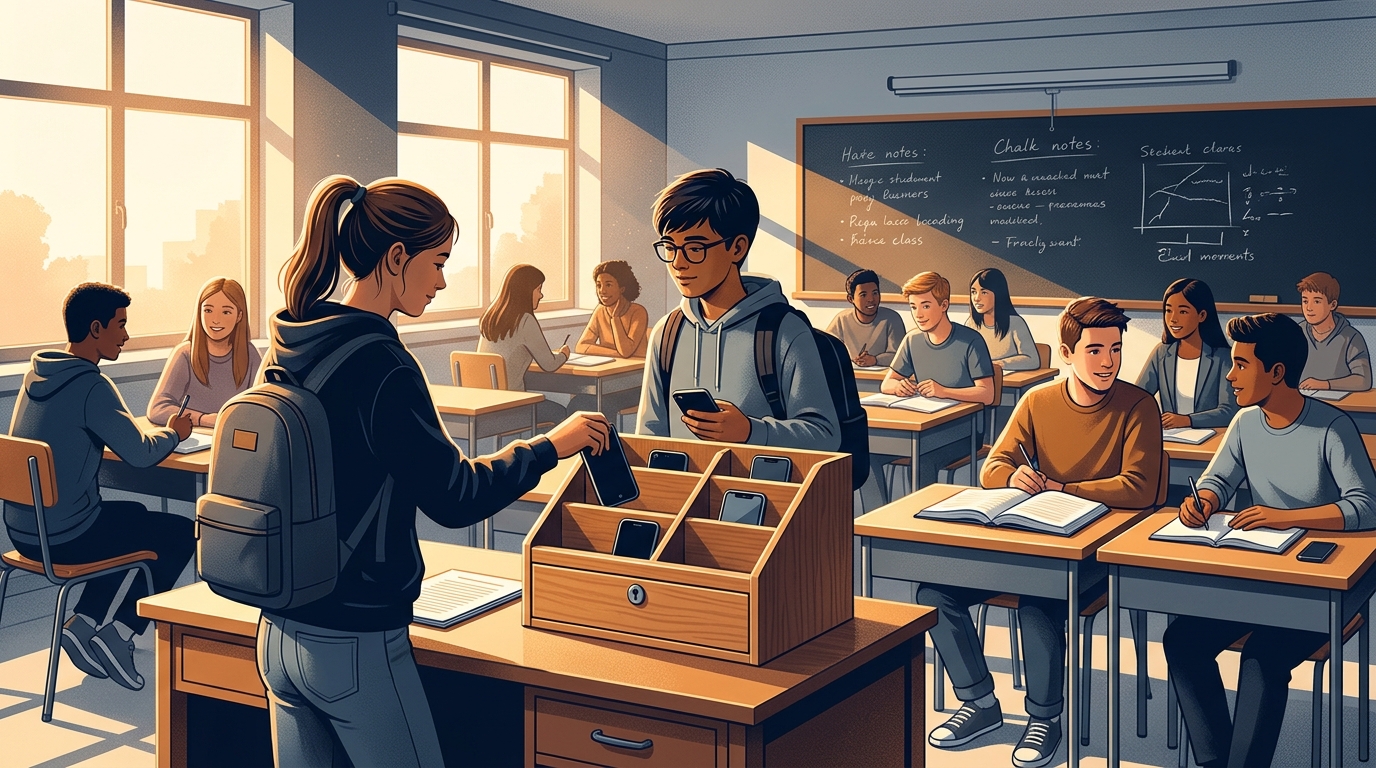
A statewide cellphone ban in Maine is showing positive results, with teachers reporting improved student attention, better classroom engagement and more social interaction among classmates. The law requires K-12 schools to prohibit cellphones and other internet-connected electronic devices from the opening bell to dismissal, with certain medical and other exceptions. Championed by Gov. Janet Mills, the policy took effect by Aug. 1, making Maine the 23rd state to implement a statewide bell-to-bell cellphone ban.
Teachers Report Better Attention and Classroom Engagement
Teachers say restricting cellphone use has helped students stay focused, complete more assignments and engage more actively in lessons. At Bangor High School, graphic arts teacher Eric Hutchins said the policy has reduced classroom distractions and saved about five minutes per class by eliminating the need to collect phones repeatedly. Andrew McCullough, an environmental science teacher at Brunswick High School, described the changes as a “breath of fresh air,” noting that students are more talkative and interact more frequently in hallways and before and after classes.
Enforcement Improves, Though Some Students Find Workarounds
Although some students continue to find ways around the restrictions, educators say compliance has improved under the stricter rules. At Brunswick High School, phones can be confiscated for the rest of the school day, compared with the previous policy of confiscation only for the remainder of a class. Bangor High School reported just two or three violations by Oct. 7, while its two middle schools had reported none. Some students still use phones in bathrooms or during lunch, and smartwatches remain difficult to monitor, but teachers say mobile devices are disrupting lessons less frequently.
Schools and Parents Adjust to New Communication Rules
Schools have adopted different approaches to enforcing the ban. Belfast Area High School requires students to keep phones switched off and out of sight in backpacks or lockers rather than using lockboxes. Administrators have also identified challenges involving school-issued Chromebooks, including students accessing online chatrooms where anonymous posts contained bullying and racial slurs. Meanwhile, some parents initially worried about losing direct contact with their children during the day, but families have continued communicating through school offices and email. Several parents said they support the restrictions because they help create a more effective classroom environment.
Editorial Fact Check & Key Findings
Key points
- Maine became the 23rd state to implement a bell-to-bell school cellphone prohibition.
- Teachers at Bangor and Brunswick report saved instructional time and improved peer socialization.
- Enforcement protocols vary from lockboxes and pouches to backpack storage with confiscation penalties.
What the evidence shows
A statewide cellphone ban in Maine is showing positive results, with teachers reporting improved student attention, better classroom engagement and more social interaction among classmates across K-12 public schools.
Background and limits
Championed by Gov. Janet Mills, the policy took effect on Aug. 1, making Maine the 23rd state to implement a statewide bell-to-bell cellphone ban requiring devices to be turned off or locked away throughout the school day.
Why this matters
Statewide school digital distraction policies offer comparative insights into classroom productivity, student mental health, and institutional enforcement across urban and rural educational districts.