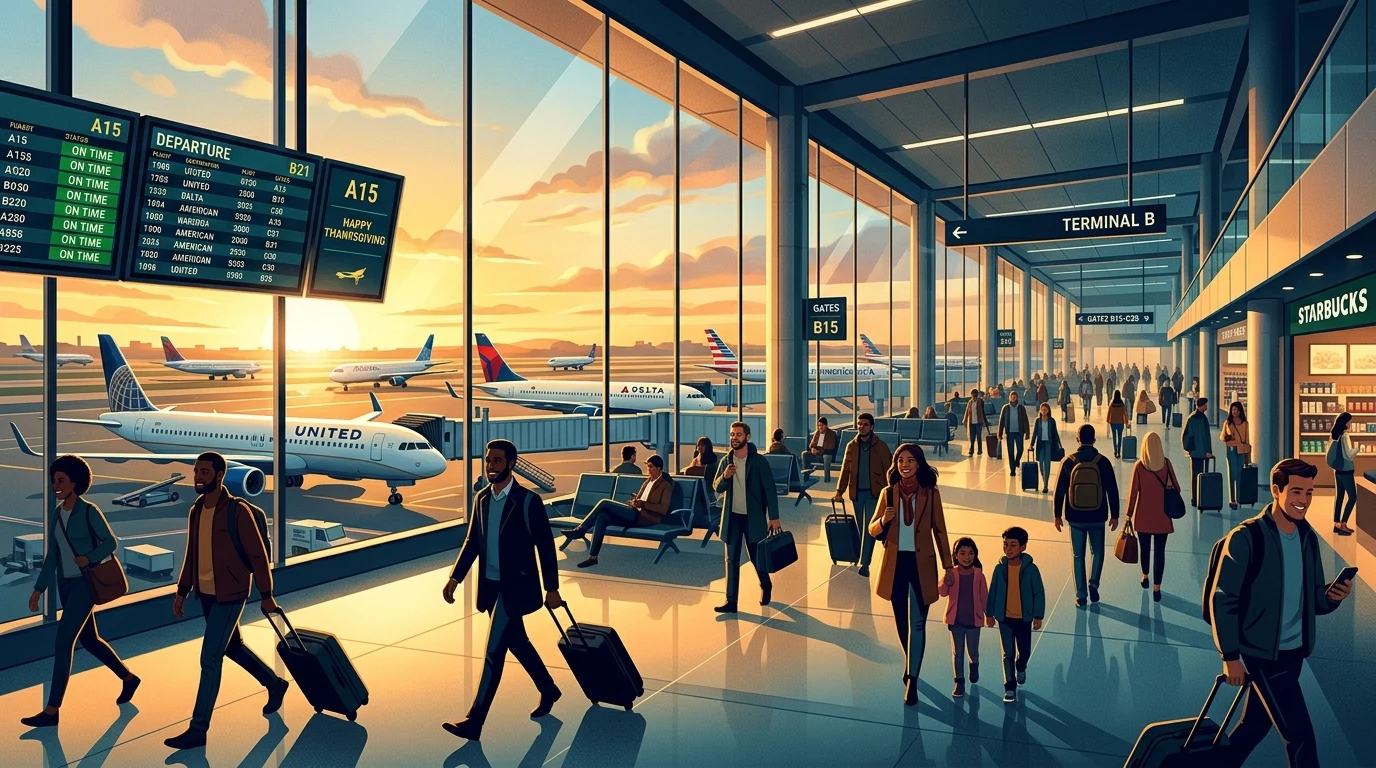
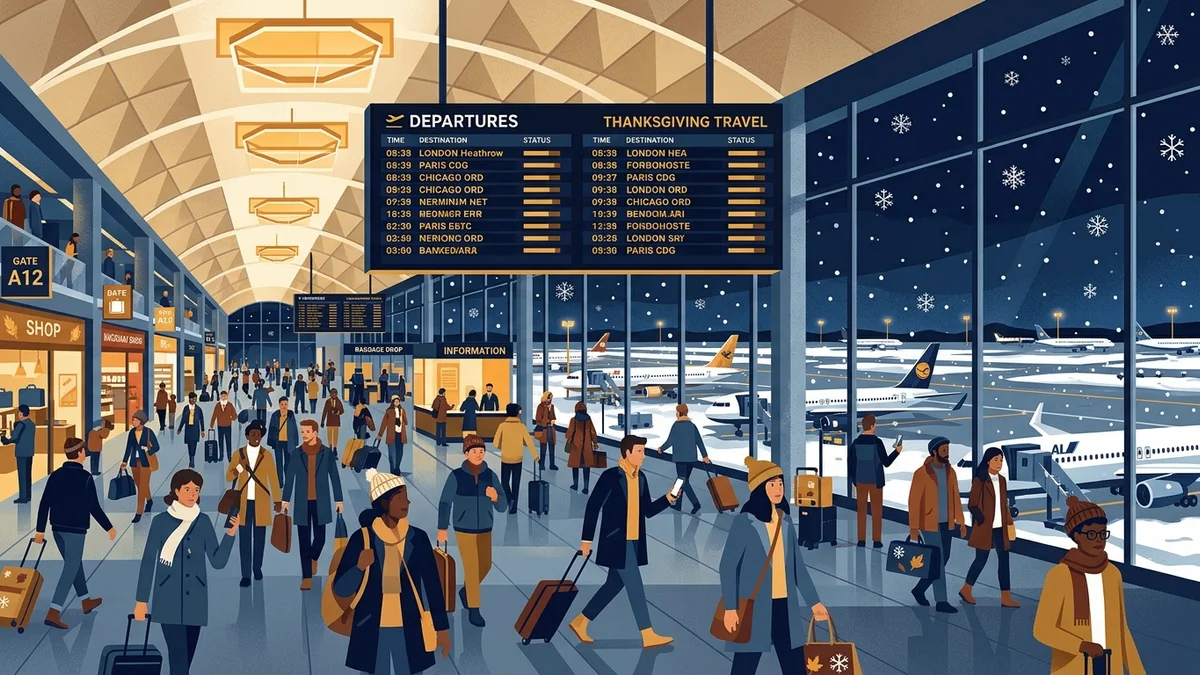
CHICAGO — Amid a relentless surge of holiday travelers setting unprecedented mobility benchmarks, the Transportation Security Administration (TSA) recorded the single busiest aviation screening day in United States history on Thanksgiving Eve, processing over 3.1 million passengers through security checkpoints across the country.
The historic holiday exodus, however, collided with severe weather across the nation’s midsection, as an intensifying arctic cold front generated lake-effect snow squalls and gusty winds, forcing ground stops and rolling departure delays across critical connecting hubs in Chicago, Detroit, and Minneapolis.
Record-Setting Volume at Nation’s Hubs
According to federal aviation monitoring statistics, the 3.1 million passengers screened on Wednesday surpassed the previous all-time daily record of 3.01 million set on July 7, 2024, by more than 90,000 travelers.
Major international gateway airports experienced near-capacity passenger queues from the early pre-dawn hours. At Hartsfield-Jackson Atlanta International, Dallas-Fort Worth, and Denver International, TSA deployed expanded canine detection teams, automated screening lanes, and mobile customer assistance personnel to maintain queue processing times under 20 minutes for standard security lanes.
“Our frontline transportation security officers and airport partners processed an unprecedented volume of holiday travelers today with professional efficiency,” said TSA Administrator David Pekoske. “Despite intense logistical strain and regional weather headwinds, our nationwide security infrastructure operated smoothly to keep Americans moving safely toward family celebrations.”
Midwest Winter Squalls Trigger Flight Disruptions
While the East and West Coasts enjoyed generally favorable autumn flying weather, the Upper Midwest and Great Lakes region faced severe meteorological challenges. The National Weather Service issued lake-effect snow warnings and winter weather advisories for northern Michigan, northwest Indiana, and western New York, warning of rapid snowfall rates exceeding two inches per hour.
At Chicago O’Hare International Airport—the nation’s busiest flight transfer nexus—the Federal Aviation Administration (FAA) initiated a ground delay program Wednesday afternoon due to gusting crosswinds exceeding 40 mph and falling visibility. More than 450 flights were delayed and over 60 regional connections canceled at O'Hare and Chicago Midway combined.
Interstate Highway Congestion and Travel Safety
On the highways, where AAA estimated over 71 million Americans were driving to holiday destinations, transportation analytics firm INRIX reported peak gridlock between 2:00 PM and 6:00 PM along major interstate arteries:
- I-95 Northeast Corridor: Travel times between New York City and Washington, D.C., expanded by nearly 65 percent above normal off-peak transit windows.
- I-80 Midwest Corridor: Heavy lake-effect squalls across northern Indiana and western Pennsylvania prompted state troopers to lower speed limits to 45 mph and restrict empty commercial semi-trailers.
- West Coast Grapevine: California highway authorities monitored mountain passes on Interstate 5 north of Los Angeles as holiday getaway traffic reached bumper-to-bumper density.
Federal transportation authorities are urging all travelers returning after the holiday weekend to plan ahead for Sunday and Monday, which are forecasted to see comparable return passenger surges across national airports and interstate corridors.