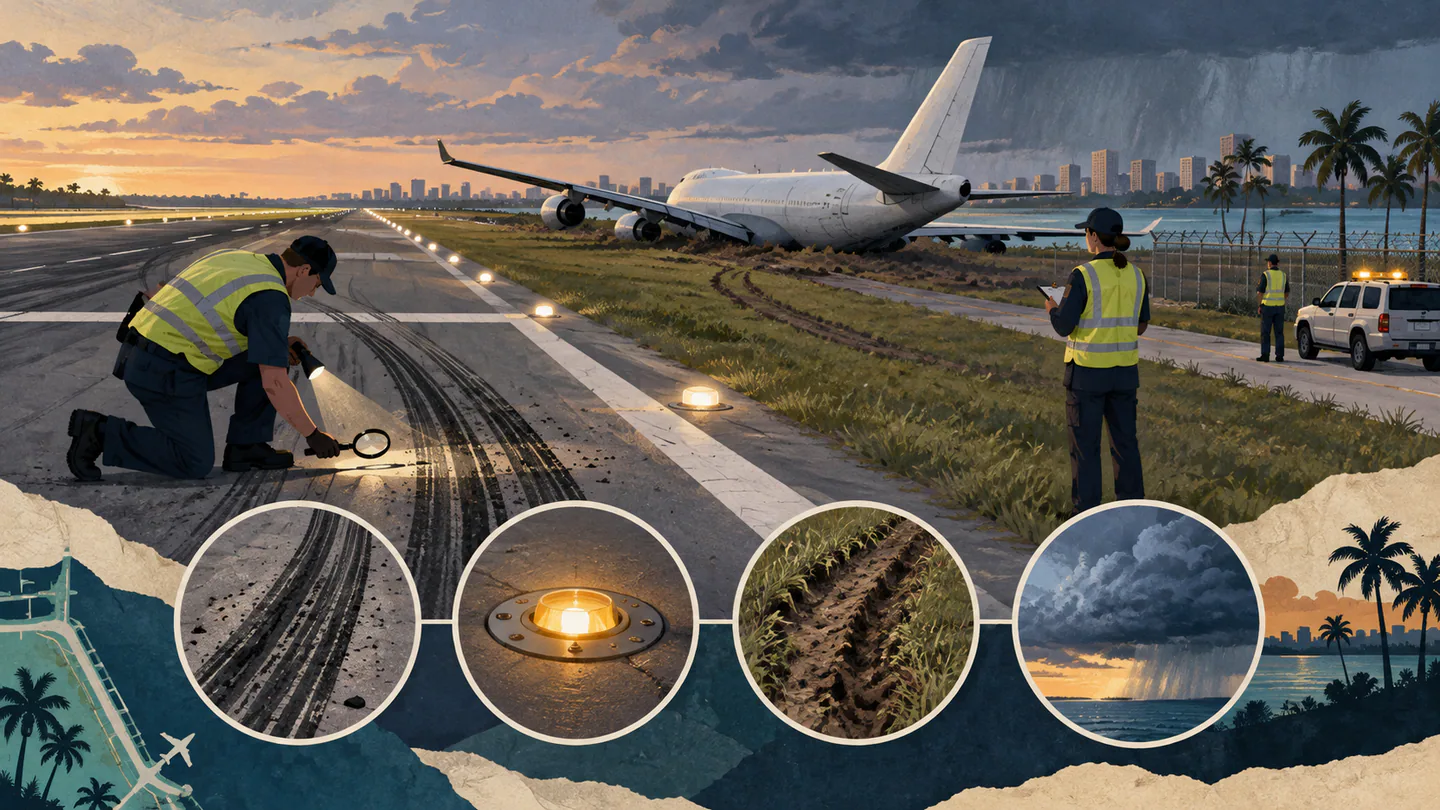
An Amazon cargo plane ran off a runway Sunday when landing at Miami International Airport, killing five people and injuring five others. A 21 Air Boeing 767-300 freighter operated by Amazon veered off a runway shortly before 2 p.m. local time after landing from San Juan, Puerto Rico. The aircraft then struck several vehicles and became engulfed in flames.
The crash set off a huge emergency at one of the country's busiest airports. Flames and heavy smoke were visible from the plane as emergency crews approached the wreckage. The plane struck a number of vehicles, trapping several people inside, while the pilots were also stuck in the cockpit and had to be rescued.
Miami-Dade County officials said five people were killed and five injured. Three of the injured were said to be in critical condition, while the other two had less serious injuries. It was not immediately clear if those killed were aboard the aircraft or on the ground, authorities said.
Eventually the airplane settled out its nose down and tailed up near the end of the runway. Scenes from the event revealed extensive damage and fire related scorching along the plane.
Boeing 767 Crashes into Cars After Leaving Runway
The plane was a Boeing 767-300 cargo plane, operated by 21 Air on behalf of Amazon’s cargo network. Flight 7598 had departed the Luis Muñoz Marín International Airport in San Juan and was on approach to Miami when it veered off the runway.
Flight-tracking data showed that the aircraft had departed the runway area at a speed of about 112 knots, or about 129 mph. It went across the runway, hit some vehicles on the ground and stopped. The collision ignited a large fire that posed further hazards to emergency responders arriving at the scene.
More than 60 emergency units and around 200 personnel were dispatched to the crash site. Firefighters fought the aircraft fire while rescue crews worked to reach those trapped in the wreckage and in nearby vehicles. An emergency response was further complicated by a fuel leak.
The plane was about 32 years old and had been a passenger plane before being converted for cargo. Officials have not indicated whether the aircraft age played a role in the crash, but its history and maintenance record is expected to be examined as part of the investigation.
Investigators will also look at the aircraft approach, where it touched down, speed and runway conditions as they piece together the last moments before the accident.
NTSB, FAA Investigate Cause of Deadly Crash
The National Transportation Safety Board is investigating the crash with a team led by NTSB Chair Jennifer Homendy en route to Miami. Boeing and 21 Air have said they will cooperate with the authorities. The Federal Aviation Administration is also investigating the accident.
Investigators will be examining why the aircraft was unable to stop within the length of the runway available. The NTSB will consider a number of possibilities, including whether the plane landed further down the runway than it should have and whether weather conditions or wind were factors. Officials have stressed that no final cause has been determined.
Weather around Miami included thunderstorms and strong gusts but whether they played a role in the accident is unknown. Before any conclusions can be drawn, investigators will need to look at the flight data, cockpit information, weather records, and condition of the aircraft.
The crash also raises questions about runway safety measures at Miami International. The airport does not have some arrestor systems that the FAA recommends helping to stop aircraft that run off runways, a concern that investigators and aviation specialists are expected to look at as part of a larger safety review.
Officials have not yet assigned blame, and the investigation could take considerable time before a final explanation is released.
Miami Airport Operations Disrupted After Crash
The crash instantly stopped all activities at Miami International Airport. Emergency personnel responded, and authorities secured the crash site as flights were temporarily suspended arriving and departing. Thousands of travelers and cargo operations were affected by the disruption at a major US aviation hub.
Information reported after the accident said more than 160 flights were canceled, and some 325 were delayed following the crash. Later Sunday, some airport operations resumed as authorities opened parts of the facility, though travelers still faced delays and possible cancelations.
Freight is also a major gateway for Miami International Airport. The crash thus not only affected passenger travel but the flow of cargo through one of the nation’s most important logistical hubs. The airport and the transportation network surrounding it are a vital part of the regional and international shipping routes used by Amazon and other freight operators.
Amazon said it was “deeply concerned” about the incident and extended condolences to those affected. The company also said it was working with authorities probing the crash.
Investigators will examine the plane and reconstruct its final approach, and authorities will try to determine why the Boeing 767 failed to stop on the runway and whether weather, aircraft performance, runway conditions or operational factors were involved. The immediate priority is recovery and support for the families of the victims and those injured while the investigation continues.
Editorial Fact Check & Key Findings
Key points
- The aircraft was operated by 21 Air for Amazon Air.
- All five fatalities were on the ground.
- The cause remains under investigation.
What the evidence shows
The cargo jet overran a runway at Miami International Airport on 6 September, crossed airport property and struck vehicles. Authorities said the five people killed were in a van; five other people were injured.
Background and limits
Preliminary flight data and a summary of cockpit audio indicate warnings about speed and an attempted go-around. Those facts are investigative leads, not a final finding about responsibility or cause.
Why this matters
Aviation investigations commonly take months. Early reporting should distinguish confirmed sequence-of-events evidence from the NTSB’s eventual probable-cause determination.