
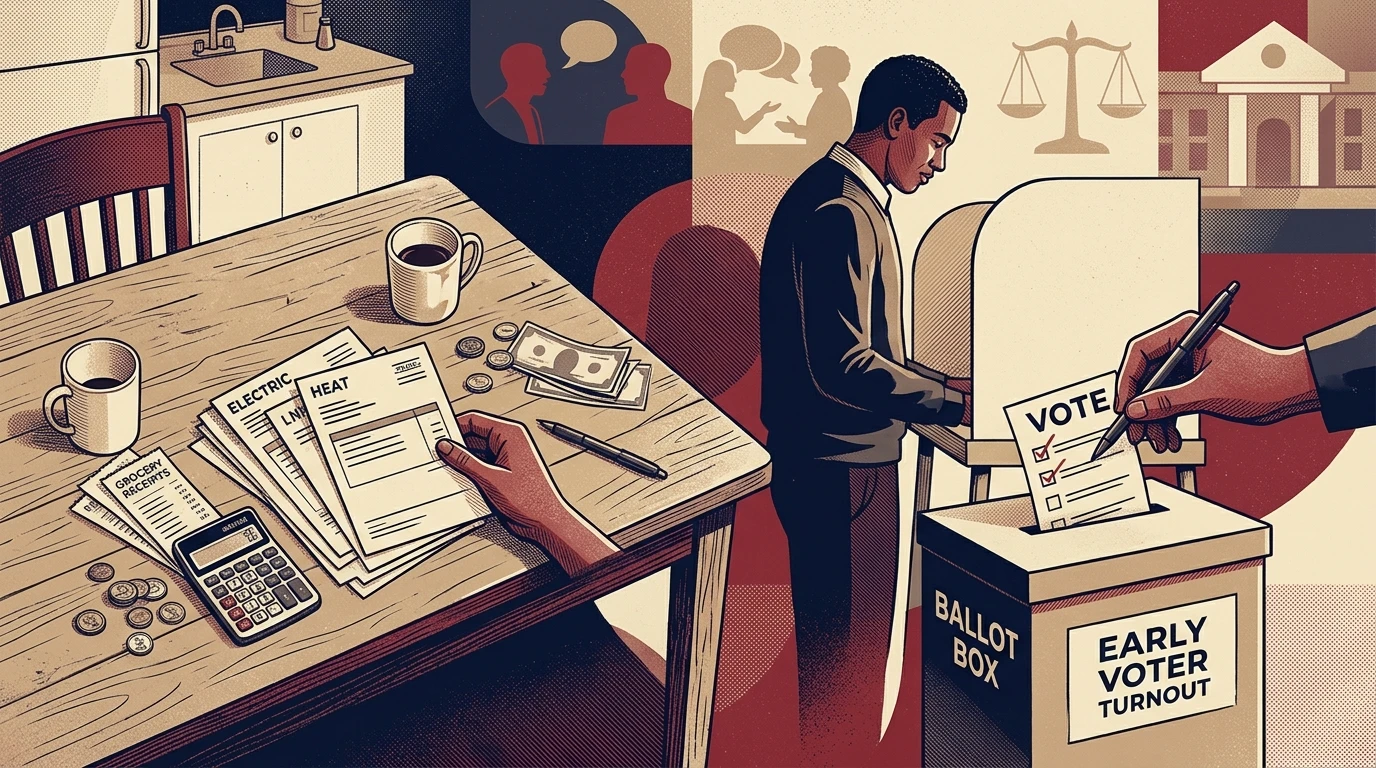
As the final campaign rallies wind down and polling stations prepare for Tuesday’s vote, the 2026 midterm elections have distilled into an inescapable referendum on economic reality. Despite glossy television advertising campaigns, fiery speeches regarding constitutional jurisprudence, and competing accusations of institutional overreach, millions of American voters are casting ballots guided by a far more intimate metric: the arithmetic of their monthly checking accounts.
The Enduring Squeeze of Cumulative Affordability
Official economic releases trumpet resilient macroeconomic growth, celebrated third-quarter GDP figures of 3.4%, and an artificial intelligence infrastructure investment boom that dazzles financial markets. Yet for the working family sitting at the kitchen table on a Sunday evening, the national numbers feel curiously detached from daily existence. The challenge confronting voters is not unemployment—jobs remain relatively accessible—but the punishing plateau of cumulative price increases built up over half a decade.
Auto insurance premiums have climbed more than 40% nationwide since 2021. Childcare expenses routinely exceed mortgage payments in metropolitan suburbs. Residential rent increases have stabilized, but at levels that permanently lock young families out of homeownership. When everyday citizens enter the voting booth, they are not grading abstract statistical indices; they are evaluating whether their purchasing power has expanded or contracted under the governing coalition.
The Failure of Partisan Scapegoating to Reassure Independent Voters
Both major political parties have struggled to construct a persuasive economic narrative for the critical bloc of independent voters who decide modern elections. The governing majority has sought to externalize blame, pointing to geopolitical turmoil, corporate profit margins, and global supply disruptions as culprits beyond executive control. While economically plausible, fatalism rarely makes for compelling political persuasion when voters demand tangible relief.
Conversely, the opposition has promised that deregulation and aggressive tariff expansion will swiftly restore mid-century purchasing power—a claim that serious fiscal economists across the ideological spectrum regard with deep skepticism. Tariffs on imported consumer goods and retaliatory overseas levies risk reigniting supply-side inflation, while fiscal deficits continue to expand regardless of which party controls the committee gavels in Congress. The American electorate recognizes these contradictions, breeding a restless, skeptical mood that fuels volatility at the ballot box.
A Call for Institutional Discipline and Honest Governance
Tuesday’s outcome will inevitably be spun through triumphant partisan lenses, with talking heads declaring sweeping ideological mandates based on handfuls of swing-district precincts. Yet whoever emerges with majorities in the House and Senate will inherit an electorate that has grown increasingly allergic to theatrical performative politics and empty symbolic gestures.
Governing effectively in a divided, high-cost economy demands genuine legislative seriousness: targeted investments in housing supply expansion, structural reform of healthcare and childcare overheads, and disciplined fiscal management that avoids compounding inflationary pressures. Until Washington aligns its legislative priorities with the grounded realities of household ledgers, the cycle of midterm voter revolts and electoral instability will remain the defining feature of American democracy.
Editorial Fact Check & Key Findings
Key points
- Cumulative cost-of-living increases remain the primary voter concern across polls.
- Over 54 million early ballots reflect historic midterm engagement.
- Independent voters in fewer than 30 swing districts hold congressional leverage.
What the evidence shows
An opinion analysis examining how cumulative price increases in auto insurance, housing, and childcare are driving voter sentiment in the 2026 midterms.
Background and limits
While headline economic indicators remain positive, persistent cost-of-living pressures have heightened voter volatility in competitive districts.
Why this matters
Clearly labeled commentary grounded in verifiable cost-of-living metrics illuminates public sentiment and democratic decision-making.