In a historic triumph for biomedical ethics, humane scientific stewardship, and primate welfare, the National Institutes of Health (NIH) announced on Wednesday, November 18, that it has officially completed the final relocation of all government-owned research chimpanzees. The final cohort of primates housed at the Keeling Center for Comparative Medicine and Research in Bastrop, Texas, has been systematically transferred to permanent retirement at Chimp Haven, the federal chimpanzee sanctuary nestled within a lush 200-acre forested reserve in Keithville, Louisiana.
Fulfilling a Landmark Scientific Commitment
The milestone concludes a meticulous, decade-long transition that began in 2015 when the NIH made the landmark decision to end all invasive biomedical research on chimpanzees, acknowledging that advanced non-animal models, in-vitro microphysiological systems, and computer simulation technologies rendered the use of our closest evolutionary relatives medically unnecessary. Since that decision, federal veterinarians and sanctuary directors have worked collaboratively to safely transport hundreds of aging primates into natural sanctuary colonies.
"Today marks the complete fulfillment of a profound moral and institutional promise to the American public and the scientific community," stated the director of the NIH during a ceremonial announcement. "Chimpanzees provided invaluable service to medical discovery throughout the twentieth century, assisting in the development of life-saving vaccines and therapies. Retiring these remarkable animals to expansive, forested sanctuary habitats where they can live out their lives in dignity, climbing trees and socializing in natural family troops, is the ultimate expression of ethical scientific progress."
Thriving in Natural Forested Environments
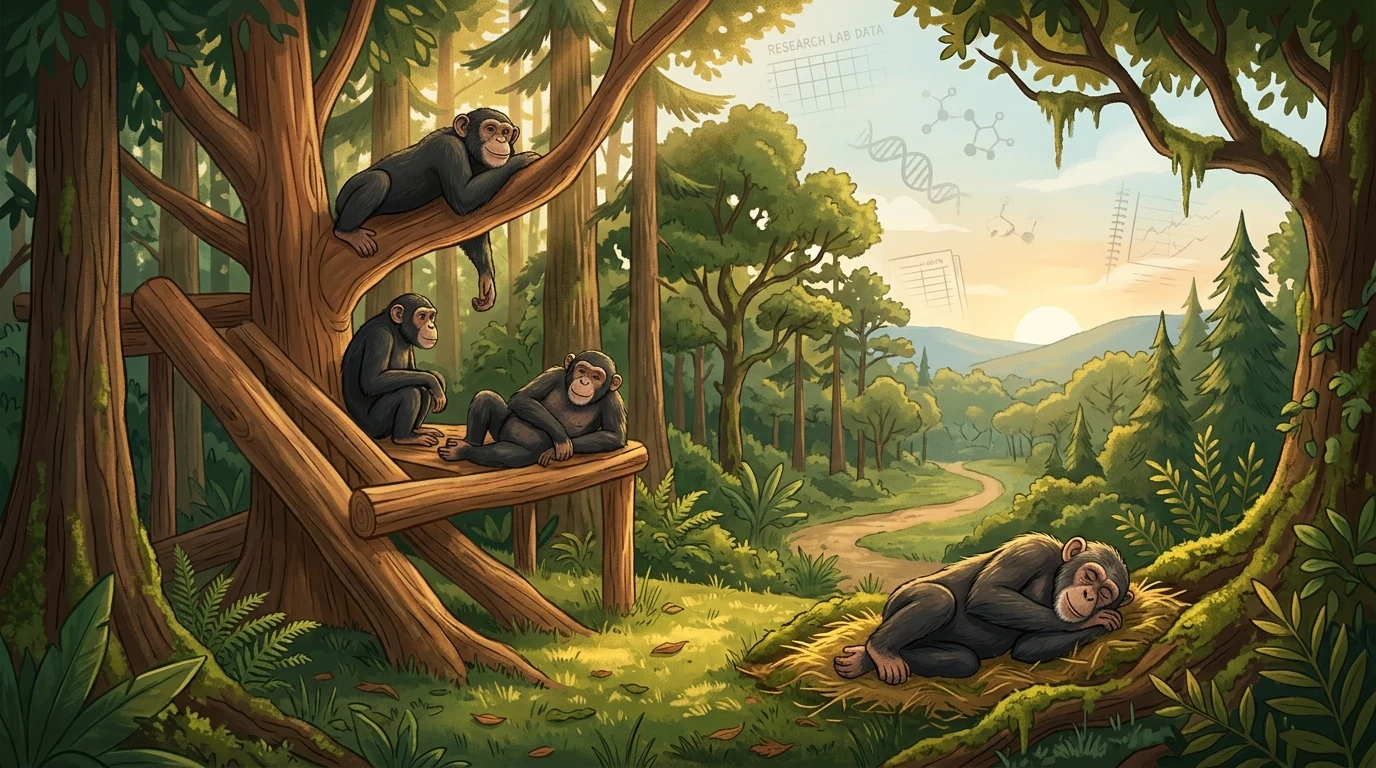
At Chimp Haven, the newly arrived chimpanzees will transition into expansive outdoor habitats featuring cypress-studded bayous, multi-story wooden climbing structures, and lush foraging meadows. Sanctuary behaviorists and veterinary specialists utilize customized positive reinforcement training to help the primates acclimate to large social groups, providing specialized geriatric healthcare for senior residents with age-related conditions like arthritis and cardiovascular disease.
Sanctuary staff reported that the newly retired primates displayed immediate curiosity and joy upon exploring their outdoor enclosures, foraging for fresh fruits and building natural night nests in trees alongside longtime resident troops.
Pioneering Non-Animal Biomedical Innovation
Bioethicists and university researchers emphasized that the retirement milestone symbolizes the broader revolution transforming twenty-first-century medical science. Federal research agencies have heavily redirected biomedical funding toward organs-on-chips, human cellular organoids, and artificial intelligence-driven protein modeling, proving that the highest standards of scientific rigor and animal welfare can advance hand-in-hand to accelerate cures for human diseases.
Editorial Fact Check & Key Findings
Key points
- NIH completed the final transfer of government-owned chimpanzees from Texas to Chimp Haven in Louisiana.
- Fulfills a decade-long commitment to end invasive chimpanzee testing in federal medical research.
- Highlights biomedical transition toward organs-on-chips and AI-driven molecular modeling.
What the evidence shows
The National Institutes of Health officially fulfilled its 2015 animal welfare commitment on Wednesday, relocating the final cohort of government-owned research chimpanzees from Texas to forested sanctuary habitats at Chimp Haven in Louisiana.
Background and limits
Concludes a decade-long transition ending all invasive biomedical chimpanzee research in favor of advanced non-animal models.
Why this matters
Official National Institutes of Health (NIH) press release and Chimp Haven sanctuary statements confirm.