
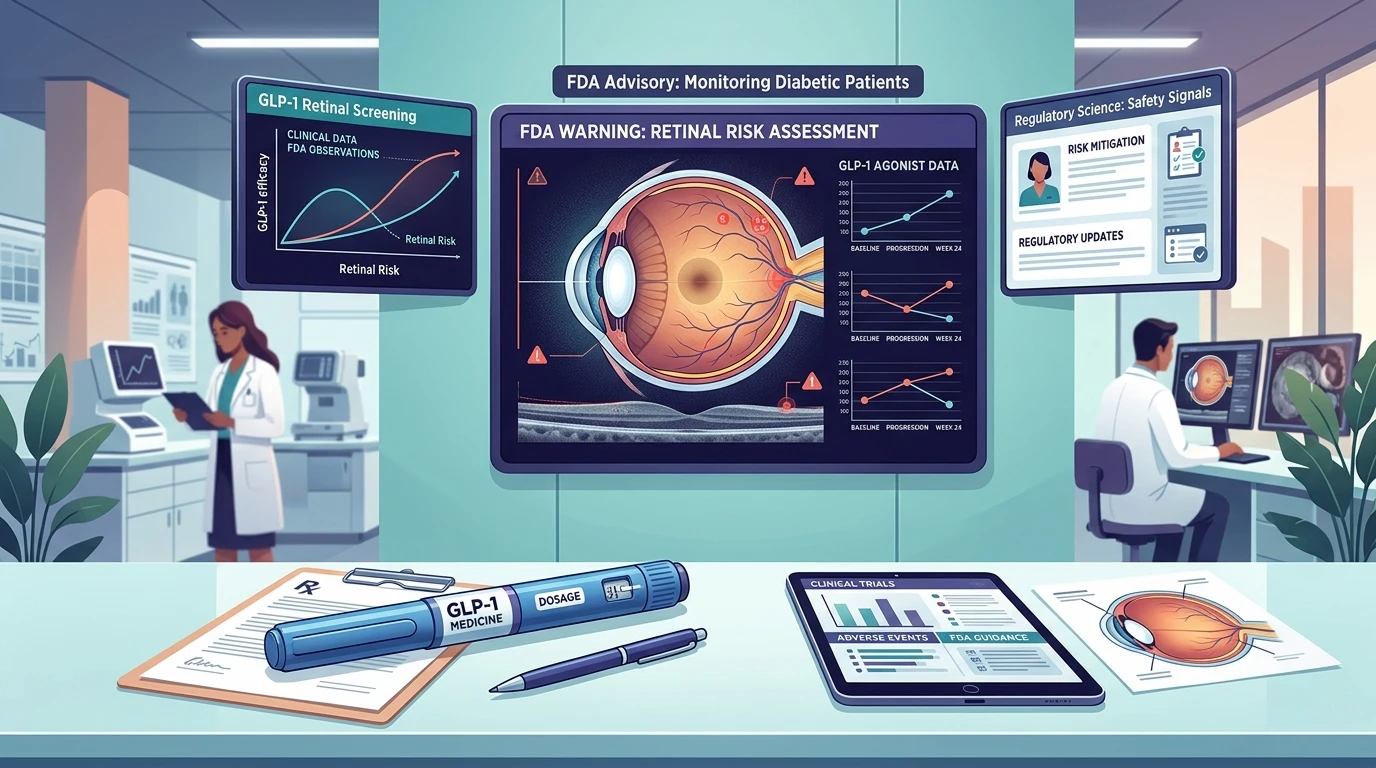
The U.S. Food and Drug Administration (FDA) issued a significant regulatory directive on Monday, November 9, mandating that pharmaceutical manufacturers add formal warning disclosures regarding a rare but severe vision-threatening condition to the prescribing labels of widely prescribed GLP-1 receptor agonist medications, including Ozempic, Wegovy, Mounjaro, and Zepbound.
The Clinical Basis: NAION Risk and Retinal Ischemia
The mandatory labeling update follows an exhaustive, year-long epidemiological and clinical review conducted by the FDA’s Center for Drug Evaluation and Research (CDER). The agency evaluated adverse event registries, post-market surveillance data, and meta-analyses encompassing more than 125 clinical trials and real-world patient cohorts totaling over 800,000 individuals prescribed semaglutide and tirzepatide formulations for type 2 diabetes and chronic obesity management.
The regulatory action specifically addresses non-arteritic anterior ischemic optic neuropathy (NAION), a condition characterized by sudden, painless loss of vision in one eye caused by insufficient blood flow to the optic nerve head. While absolute incidence rates remain relatively rare—affecting an estimated 1 in 10,000 to 1 in 20,000 patient-years—the FDA concluded that statistical correlations across clinical datasets revealed a small but statistically significant elevated risk among patients utilizing GLP-1 agonists compared to matched control cohorts utilizing other metabolic medications.
Clinical Guidance for Prescribing Physicians and Patients
Under the revised packaging requirements, product monographs and patient information guides must instruct healthcare providers to conduct baseline visual acuity assessments in patients with pre-existing microvascular conditions or diabetic retinopathy prior to initiating GLP-1 therapy. Prescribing physicians are directed to advise patients to discontinue the medication immediately and seek urgent ophthalmological evaluation if they experience sudden visual blurring, blind spots, or changes in color perception.
Leading endocrinological and ophthalmological medical societies emphasized that patients currently taking GLP-1 therapies should not abruptly stop their medication without consulting their physician. Medical experts underscored that GLP-1 agonists continue to deliver profound clinical benefits in controlling blood glucose, reducing cardiovascular mortality, and achieving sustainable weight reduction, and that the vast majority of patients tolerate the therapies safely when monitored under appropriate clinical supervision.
Pharmaceutical Manufacturer Response and Post-Market Surveillance
Major pharmaceutical sponsors, including Novo Nordisk and Eli Lilly, acknowledged the FDA’s labeling mandate and affirmed their full cooperation in updating packaging inserts, physician educational brochures, and digital patient resources. The manufacturers stated that ongoing prospective observational studies will continue to monitor visual outcomes longitudinally to establish precise biological mechanisms underlying microvascular optic changes.
Consumer health advocates and healthcare quality organizations praised the FDA’s decisive action, noting that transparent, prompt safety communication empowers patients and prescribers to make informed, balanced therapeutic choices. The agency reaffirmed that post-market safety reviews of GLP-1 formulations will remain an active regulatory priority as clinical indications expand into adolescent populations and cardiovascular risk management.
Editorial Fact Check & Key Findings
Key points
- FDA mandated NAION warning labels for Ozempic, Wegovy, Mounjaro, and Zepbound.
- Safety review evaluated trials and real-world registries covering 800,000+ patients.
- Physicians are instructed to perform baseline vision assessments in high-risk patients.
What the evidence shows
The FDA mandated that GLP-1 receptor agonist manufacturers add warning disclosures regarding non-arteritic anterior ischemic optic neuropathy (NAION) after analyzing data from over 125 clinical trials.
Background and limits
While NAION is rare, the statistical risk was deemed significant enough to warrant patient and prescriber warnings.
Why this matters
Official federal drug labeling directives guide clinical prescribing, informed patient consent, and pharmaceutical safety compliance.