
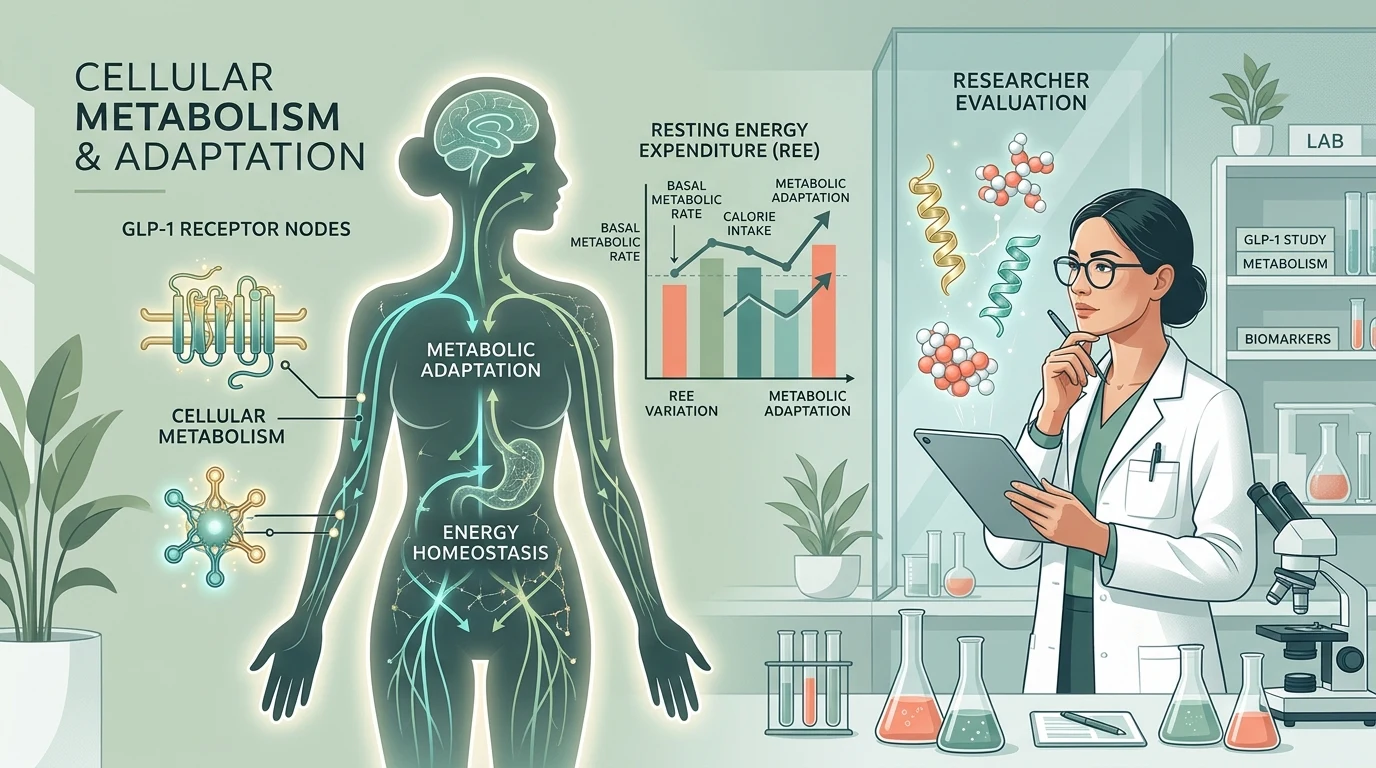
While glucagon-like peptide-1 (GLP-1) receptor agonists have revolutionized the clinical management of obesity and type-2 diabetes, physicians have long grappled with a perplexing clinical mystery: why do medications like semaglutide and tirzepatide produce dramatic, sustained weight reductions exceeding 20% in certain individuals, while others plateau rapidly or experience modest results despite identical dosing? In a groundbreaking clinical investigation published Thursday, November 19, in Cell Metabolism, an international team of endocrinologists and metabolic researchers uncovered the underlying biological mechanism driving these disparate outcomes.
The Hidden "Energy-Saving" Metabolic Brake
Utilizing whole-room indirect calorimetry, continuous glucose monitoring, and cellular muscle biopsies across a cohort of over 1,200 clinical participants, researchers identified that individuals who experience limited weight loss on GLP-1 therapies possess an evolutionary "energy-saving" metabolic adaptation response. When appetite is chemically suppressed by the medication, their autonomic nervous systems and mitochondrial cellular pathways respond by drastically downregulating basal resting metabolic rate, burning up to 450 fewer calories per day than predicted by body mass index algorithms.
"For decades, medical professionals incorrectly assumed that non-responders to weight-loss therapies were simply non-compliant with dietary guidelines," explained the study's lead clinical investigator. "Our research decisively disproves that misconception. The human body is biologically wired for survival against famine. In roughly one-third of patients, GLP-1 receptor activation triggers an aggressive homeostatic counter-response that conserves energy at the cellular level, effectively neutralizing the calorie deficit created by reduced food intake."
Preserving Lean Muscle Mass Through Lifestyle Medicine
The study also revealed a critical correlation between body composition and metabolic resilience. Participants who engaged in structured progressive resistance training and consumed adequate high-quality dietary protein during GLP-1 therapy preserved metabolically active lean muscle tissue, successfully blunting the adaptive metabolic slowdown. In contrast, patients who lost significant lean muscle tissue experienced severe reductions in resting expenditure, predisposing them to immediate weight regain if medication was paused.
Endocrinology societies praised the findings, emphasizing that GLP-1 medications should never be prescribed as standalone monotherapies. Clinicians are updating practice guidelines to mandate comprehensive lifestyle medicine protocols—combining resistance exercise, sleep optimization, and personalized nutrition—alongside pharmaceutical prescriptions.
Pioneering Personalized Metabolic Medicine
The research team unveiled an algorithmic biomarker panel that can predict an individual’s likelihood of metabolic compensation prior to initiating therapy, allowing physicians to customize pharmaceutical combinations with metabolic rate-enhancing agents. Researchers concluded that understanding individual biological heterogeneity transforms metabolic care from trial-and-error prescribing into precise, compassionate personalized healthcare.
Editorial Fact Check & Key Findings
Key points
- Study evaluated whole-room calorimetry and cellular biopsies across 1,200 clinical participants.
- Identified homeostatic metabolic slowdown in non-responders reducing resting calorie burn by 450 kcal/day.
- Demonstrated that progressive resistance training and protein preservation blunt the metabolic slowdown.
What the evidence shows
A multi-center clinical study published in Cell Metabolism discovered that patients with limited weight loss on GLP-1 therapies experience an "energy-saving" metabolic adaptation that downregulates resting energy expenditure by up to 450 calories daily.
Background and limits
Explains biological heterogeneity in GLP-1 response and highlights the critical necessity of preserving lean muscle mass.
Why this matters
Published peer-reviewed Cell Metabolism research findings and clinical calorimetry registries verify.