
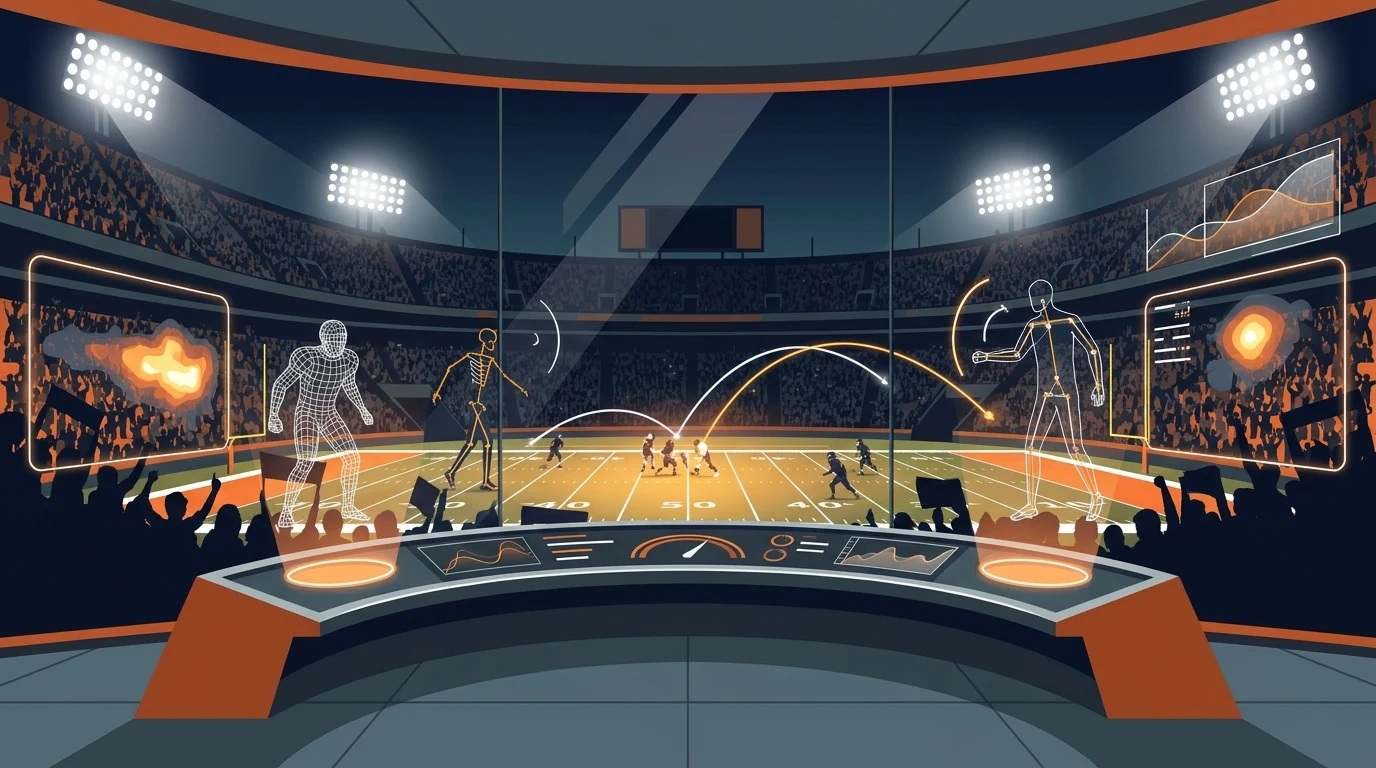
Marking a transformative leap forward in the convergence of collegiate athletics, enterprise artificial intelligence, and biomechanical engineering, the University of Texas at Austin officially inaugurated the Bevo Lab on Sunday, November 15. Developed through an ambitious multi-million-dollar technology consortium with Google Cloud and Dell Technologies, the state-of-the-art facility establishes the nation’s premier collegiate incubator dedicated to advanced predictive sports analytics, real-time injury risk mitigation, and automated kinematic performance modeling.
Next-Generation Computer Vision and Biomechanical Tracking
Housed within the expanded Darrell K Royal-Texas Memorial Stadium athletic complex, the Bevo Lab integrates high-speed multi-angle optical tracking cameras, subterranean force plates, and Dell PowerEdge edge-computing clusters powered by Google Cloud generative models. The facility captures micro-second spatial kinematics across collegiate student-athletes, mapping joint stress loads, acceleration torque, and neuromuscular fatigue indicators across football, basketball, track and field, and baseball programs.
"Collegiate athletics has entered an era where competitive excellence is inseparable from data science and athlete wellness," stated University of Texas Athletic Director Chris Del Conte during the dedication ceremony. "The Bevo Lab provides our coaches, trainers, and student-athletes with world-class computational tools to optimize training regimens, predict and prevent soft-tissue injuries, and pioneer the future of athletic analytics."
Bridging Student Data Science with On-Field Strategy
Beyond varsity performance optimization, the laboratory serves as a groundbreaking academic nexus between Texas Athletics, the Cockrell School of Engineering, and the Department of Computer Science. Graduate and undergraduate researchers will work directly alongside sports scientists, analyzing terabytes of game telemetry to build proprietary predictive algorithms for game-day tactical decision-making, in-game play sequence modeling, and customized nutritional recovery protocols.
Google Cloud sports technology executives highlighted that the machine learning models developed within the Bevo Lab operate with near-zero latency, enabling coaching staffs to receive real-time situational probability assessments during scrimmages and practices. "We are democratizing elite enterprise analytics for collegiate athletics," noted Google Cloud Vice President of Enterprise Solutions Mark Weber. "The insights generated here in Austin will define the next decade of sports biomechanics globally."
The Rapid Modernization of College Athletic Infrastructure
The launch reflects an accelerating arms race among Power Conference athletic departments to build integrated sports technology ecosystems. With conference realignments and student-athlete revenue-sharing models transforming collegiate economics, university leaders are increasingly prioritizing corporate technology alliances that enhance recruiting, athletic longevity, and student-athlete welfare.
Editorial Fact Check & Key Findings
Key points
- University of Texas unveiled the Bevo Lab sports analytics and performance incubator.
- Consortium includes Google Cloud and Dell Technologies providing edge-computing and AI models.
- Facility integrates kinematic tracking cameras and force plates across Longhorn athletic teams.
What the evidence shows
The University of Texas at Austin unveiled the Bevo Lab in partnership with Google and Dell Technologies, establishing an athletic performance incubator utilizing high-speed optical tracking and AI kinematic modeling.
Background and limits
Collegiate athletic programs are increasingly adopting enterprise-grade sports technology to prevent injuries and optimize tactics.
Why this matters
University of Texas official press releases and Google Cloud partner announcements confirm facility launch.