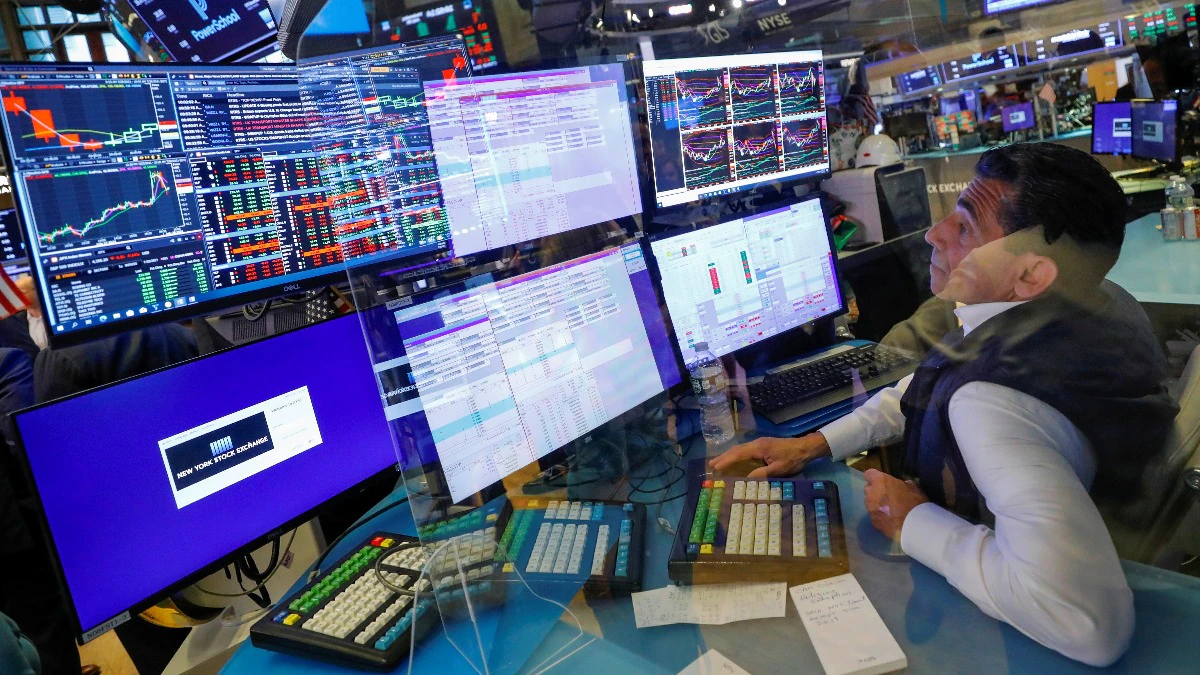

As 2025 draws near, companies associated with artificial intelligence are becoming one of the most vulnerable sectors of the world's equity markets, exhibiting increased volatility. Price fluctuations across AI-focused companies have been exacerbated by rapid changes in investor opinion, shifting economic data, and developing regulatory considerations. Technology companies involved in sophisticated semiconductors, software platforms, and AI infrastructure have seen dramatic intraday fluctuations. Outsized reactions are being triggered by central bank comments, macroeconomic indicators, and earnings announcements, which reflect both elevated growth expectations and heightened valuation uncertainties. Market players observe that AI stocks have drawn interest from both long-term and speculative investors. Revenue growth is still being supported by strong demand for AI-driven goods, but high valuations provide little room for disappointment. The industry is experiencing sudden repricing as a result of even slight modifications to external conditions or direction. The success of AI stocks has been significantly influenced by U.S. economic statistics. Since borrowing costs have a direct impact on growth-stock values, inflation readings, labor market indicators, and interest rate expectations are all actively monitored. AI stocks frequently experience a significant increase when inflation data improves. On the other hand, when expectations for rate cuts change, stronger-than-expected data may cause quick pullbacks. In order to handle this sensitivity, institutional investors are modifying their tactics. Companies with diverse revenue streams, robust cash flows, and obvious routes to profitability are preferred by portfolio managers, who are becoming more picky. To mitigate any downside risks while preserving exposure to long-term AI growth, hedging techniques including sector rotation and options are being employed. This volatility is also being reflected in international markets. In response to advancements in international trade, data center investment, and cross-border technology partnerships, European and Asian AI-linked equities have followed U.S. trends. Geopolitical factors and currency fluctuations have also contributed to regional disparities in success. Discussions about artificial intelligence regulations also have an impact on investor behavior. Policymakers and governments are considering ethical principles, data privacy regulations, and oversight structures. Regulation is thought to be essential for long-term stability, but short-term uncertainty has increased market volatility, especially for businesses that are significantly involved in the development and application of AI. As investors strike a mix between optimism and prudence, trading volumes indicate active repositioning. AI and advanced technology-focused exchange-traded funds have had sporadic inflows and outflows, indicating that the market is still trying to find equilibrium. The current climate, according to analysts, is one of recalibration rather than retreat, with investors reevaluating their assumptions about valuation and risk tolerance. The long-term forecast for artificial intelligence is still positive, despite the short-term volatility. Sustained demand for AI solutions is supported by ongoing investments in automation, cloud computing, and data analytics. Market players do admit, though, that as the industry develops and competition heats up, price stability can continue to elude them. It is anticipated that AI stock sensitivity would continue to be a characteristic of trade in 2025. Macroeconomic data, policy signals, and corporate outcomes are likely to cause investors to react swiftly, creating selected opportunities and increasing volatility. Market participants will face the difficulty of striking a balance between rigorous risk management and exposure to revolutionary development. All things considered, increased sensitivity in AI-related equities highlights how technology investment is changing. Volatility is expected to continue to be a major trend as 2025 draws near, reflecting both the potential and the uncertainty surrounding one of the most significant industries in international markets.