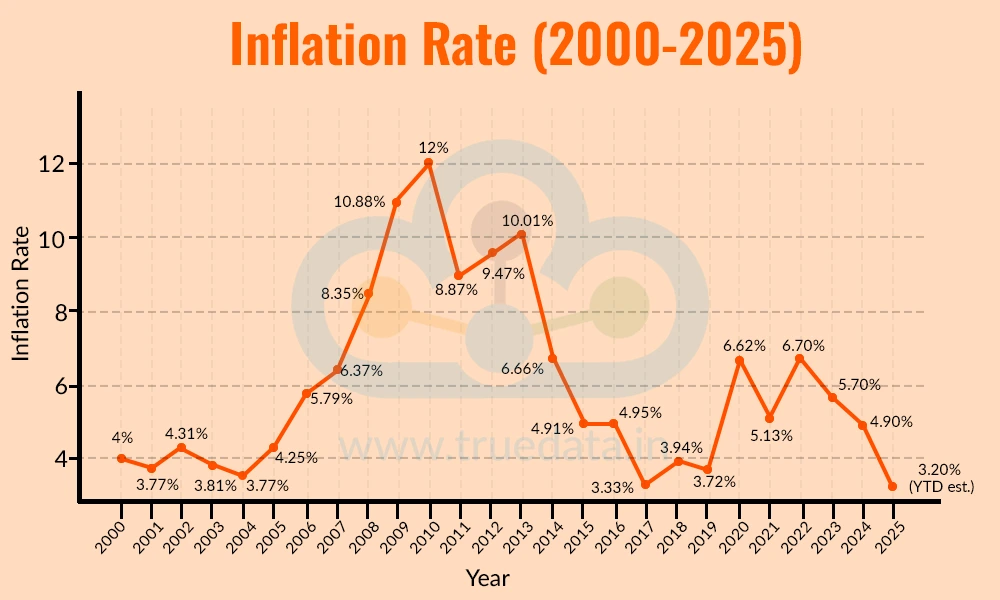
The U.S. bond market has historically been primarily driven by inflation patterns, which have an impact on corporate bonds, Treasury yields, and other fixed-income instruments. The sensitivity of bonds to changes in price levels has been brought to light by recent data releases and economic signals, which has created a complicated environment for investors. A thorough analysis of the mechanisms relating inflation, interest rates, and market mood is necessary to comprehend these responses. Yield Dynamics and Inflation Fundamentally, the relationship between inflation and bonds is simple: investors desire higher yields since rising inflation reduces the purchasing power of fixed coupon payments. Slowing inflation, on the other hand, lowers yields and supports prices by cutting the opportunity cost of owning bonds. Treasury rates immediately adjusted in December in response to weaker inflation data, with shorter-term maturities responding more strongly because of their sensitivity to expectations for monetary policy. Rate outlook and market expectations Investors in bonds keep a close eye on the Federal Reserve's interest rate policy. Expectations regarding future rate increases or decreases are directly influenced by inflation trends. Markets factor in a decreased probability of aggressive tightening when inflation shocks to the downside. Bond prices rise and yields decline as a result. On the other hand, as investors expect rate hikes to preserve price stability, sustained inflation may cause rates to rise. A delicate balancing act between immediate inflation easing and long-term worries about core inflation was evident in the December movements. Sectoral Bond Reactions Each link reacts differently. Treasuries react directly to macroeconomic data because they serve as the benchmark for risk-free rates. Corporate bonds react to perceptions of credit risk as well as rate expectations, especially investment-grade and high-yield issuers. While high-yield bonds reflect both credit spreads and general economic optimism, investment-grade corporate bonds may benefit from lower rates during times of mild inflation. Another level of complexity is added by the fact that municipal bonds are impacted by tax and fiscal outlooks. Positioning of Investors and Technical Aspects A key factor in enhancing market responses is positioning. When the CPI or other inflation indices are announced, algorithmic trading and computer models swiftly modify positions, and many institutional investors use derivatives to hedge interest-rate risk. Because there are fewer players available to absorb large orders during holiday times or in between important reporting dates, thin liquidity can exacerbate price movements. Even when inflation data shows only slight fluctuations, bond rates can occasionally fluctuate substantially due to these technical considerations. Influences on Behavior and Sentiment Bond market movements are influenced by market psychology. Particularly following times of increased volatility, investor emotion frequently responds more quickly than fundamentals. Even while headline inflation seems controllable, ongoing uncertainty can lead to defensive positions, while soft inflation data create relief rallies in Treasuries. These acts demonstrate that perception influences bond market responses just as much as statistics, revealing the human factor hidden behind the numbers. Worldwide Perspective Global events also affect the responses of the U.S. bond market. The demand for Treasuries is influenced by geopolitical events, exchange rates, and foreign central bank policies. For example, international purchasers seeking yield stability may be drawn to a weaker dollar, and demand for safe haven assets may rise in response to geopolitical tensions. A globally interconnected market is created when investor expectations for U.S. interest rates are influenced by inflation developments in other economies. In conclusion U.S. bond markets react to inflation patterns in a variety of ways. While investor positioning, technical trading, and behavioral factors magnify swings, yields are adjusted based on both current market data and projected monetary policy. The situation is further complicated by sectoral variations, liquidity circumstances, and external factors. When navigating bond markets, investors need to realize that inflation is just one aspect of the whole. In a highly interconnected financial system, fundamentals, expectations, and human psychology all interact to create market reactions. These dynamics are complex, as demonstrated by the December trends, which provide information on how corporate, municipal, and Treasury bonds react to the constantly changing inflation environment.