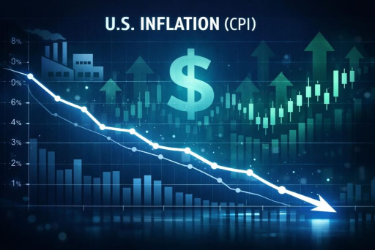

For investors navigating an unpredictable economic environment, a lower-than-expected Consumer Price Index (CPI) data has emerged as a defining signal. Although markets frequently respond quickly to inflation statistics, a soft CPI has deeper implications that go beyond daily price movements and short-term rallies. Fundamentally, a declining CPI indicates that inflation pressures may be lessening throughout the American economy. Because inflation has been the main force behind tight monetary policy for the previous two years, this development is extremely significant to investors. Even while quick policy changes are not assured, expectations move toward a more accommodating Federal Reserve posture when inflation declines. Usually, equity markets react first. Particularly for businesses focused on expansion, lower inflation lessens the impact of rising interest rates on corporate profits. When investors reevaluate future profit prospects in a lower-rate environment, technology and consumer discretionary sectors frequently gain. Better sentiment and a greater desire for risk are the outcomes, especially in industries where borrowing rates are a concern. The story of bond markets is more complex. While declining rates indicate hope that inflation is slowing, they also raise concerns about the pace of the economy going forward. Investors are considering the likelihood that slower demand as well as better supply circumstances are contributing to the slowing of inflation. Fixed-income strategies are still shaped by this harmony between relief and restriction. Sustainability is the key to a soft CPI for long-term investors. A trend is not defined by a single positive data point. Stable wage growth, robust consumer spending, and stable employment conditions are necessary to sustain inflation progress. Market optimism runs the risk of losing touch with economic reality in the absence of these cornerstones. CPI data also has a significant impact on currency markets. The U.S. dollar is frequently under pressure from a softer inflation figure, which reflects expectations of lower relative interest rates. A declining dollar might boost exports and multinational profits, but it can also affect import costs and commodity prices, producing new inflation dynamics that investors need to keep an eye on. Timing is another important consideration. Generally speaking, markets move more quickly than governments. When expectations surpass official guidance, investors may price in future rate cuts well before central banks take action, leading to bouts of volatility. If later data contradicts early optimism, this discrepancy may cause abrupt reversals. In a soft-inflation environment, portfolio strategy calls for self-control. Diversification is always crucial even though stocks could profit from rising sentiment. Particularly if economic uncertainty persists into 2026 planning cycles, bonds, defensive industries, and income-generating investments continue to be important. Crucially, structural vulnerabilities are not eliminated by a soft CPI. Markets are nevertheless impacted by global growth imbalances, fiscal constraints, and geopolitical concerns. Investors who just pay attention to inflation run the danger of ignoring these more general factors that influence long-term profits. A softer CPI result is ultimately a positive indication rather than a conclusion. Instead of providing a clear path plan, it provides breathing room. Investors are better equipped to handle the changing market situation in the future if they strike a balance between optimism and caution, as well as between data and discipline.