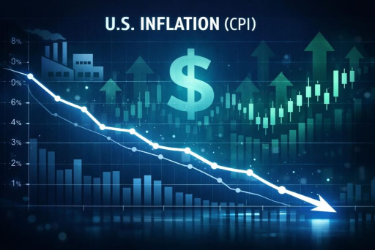
The technology sector, which has once again emerged as the main driver of advances, is largely responsible for the recent pace of the U.S. stock market. Tech equities, from semiconductor leaders to large-cap platforms, are influencing not only index performance but also overall investor confidence in various markets. Technology's weight in important indices contributes to its effect. Since mega-cap tech companies now hold a sizable portion of the Nasdaq and S&P 500, even small gains can improve market performance as a whole. Benchmarks frequently follow these companies' ascent, enhancing the impression of a robust and resilient market. The appeal of technology has increased as inflation forecasts have decreased. Interest rate pressure is lessened by lower inflation, which is especially advantageous for growth-oriented businesses whose valuations rely significantly on future profits. Technology companies are at the heart of market rallies as investors are increasingly ready to pay more for long-duration assets as Treasury yields decline or level off. Resilience in earnings has also been crucial. Many tech companies continue to produce good revenue, robust cash flows, and careful cost management even while growth has slowed from post-pandemic heights. Investors have been encouraged by these fundamentals that technology leaders are more equipped than more cyclical industries to handle economic volatility. An additional layer of momentum has been introduced by artificial intelligence. Long-term growth narratives have been strengthened by ongoing investments in cloud computing, data services, and AI infrastructure. The idea that AI-driven productivity increases will change business models has kept money flowing into the industry despite short-term instability. But the supremacy of technology also brings opportunities and risks. Concerns over concentration are raised by the fact that market momentum is becoming more and more dependent on a small number of stocks. Broader market participation declines when leadership becomes overly focused, making indices susceptible to steep declines if sentiment changes around a few important names. There is still disagreement over valuation. Even if earnings support has improved, several IT sector sectors are trading at higher multiples than they have historically. Investors are weighing their optimism about innovation against the fact that greater valuations reduce the possibility of disappointment in the event that policy conditions tighten or GDP slows. The impact of technology goes beyond stocks as well. Strong tech performance has an impact on currency dynamics, capital movements, and even the demand for commodities related to chip manufacturing and data centers. Because of this, changes in the sector frequently have an impact on other asset classes, increasing its influence on the direction of the market as a whole. From a policy standpoint, IT momentum interacts with geopolitical and regulatory factors. The operating environment is still shaped by data governance, supply chain resilience, and trade policy. Sentiment can be swiftly changed by any changes in these areas, highlighting the industry's vulnerability to non-financial threats. Balance is the main obstacle for investors. Although reliance on a single sector increases susceptibility, technology continues to be a crucial engine of market momentum. While still reaping the benefits of tech-led growth, diversification across industries and styles can help control risk. It is unlikely that the tech industry's contribution to market momentum will soon decline. Ongoing support is provided by robust balance sheets, innovation cycles, and structural demand for digital infrastructure. However, if leadership extends beyond technology and whether the state of the economy supports the current optimism will determine how long market gains will last. Technology continues to set the pace in the foreseeable future. The sustainability of profitability, the clarity of policy, and investors' willingness to look beyond a small group of market leaders will determine if it can sustain the market as a whole.