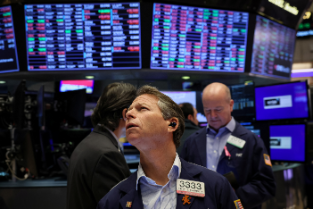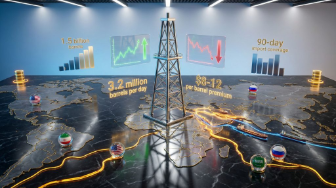
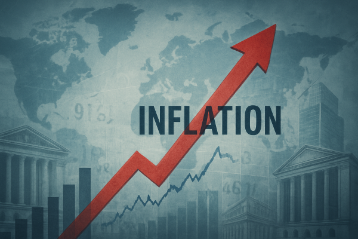
Once again, the most recent U.S. inflation data is influencing economic forecasts outside of the country. Policymakers and investors are modifying projections as ongoing price pressures in the world's largest economy continue to impact global financial conditions, from central banks in Europe to export-driven economies in Asia. In the global system, U.S. inflation is unusually significant. Changes in U.S. pricing frequently affect currency markets, interest-rate choices, and capital flows globally since the dollar continues to be the foundation of international trade and finance. The latest data has reaffirmed worries that inflation would continue to be uneven, making it more difficult to attain steady growth across regions. Advanced economies are paying close attention to how future monetary policy may be influenced by U.S. inflation trends. Higher U.S. interest rates have a tendency to tighten credit conditions globally, making borrowing more expensive for both firms and governments. The challenge of managing internal inflation pressures without impeding growth at a precarious point in the economic cycle is one that many economies are currently facing. In emerging markets, the effects are more noticeable. Many are vulnerable to currency fluctuations linked to U.S. economic signals because they rely mostly on trade and financing in dollars. The dollar frequently appreciates when U.S. inflation stays high, impacting import prices and raising the cost of servicing foreign debt. This puts further strain on nations that are already struggling financially. In response, international trade is likewise changing. Export quantities in Asia, Europe, and Latin America are impacted by shifts in U.S. consumer demand. As future demand becomes more unclear, manufacturers and commodity producers are reevaluating pricing methods, inventory plans, and supply contracts. Long-term trade planning can be impacted by even slight changes in inflation forecasts. Instead of panicking, financial markets have reacted cautiously. Increased sensitivity has been reflected in currency fluctuations, bond rates, and equities prices as investors balance hopes for eventual stabilization against the possibility of sustained inflation. Portfolio strategies are becoming more and more selective, giving preference to industries and geographical areas that are seen to be better equipped to withstand economic shocks. Households are experiencing inflationary pressures outside of markets. Concerns about the cost of living are being exacerbated in many nations by rising expenses linked to worldwide price patterns. Inflation is a major political and social concern globally as a result of growing public demand on governments to give relief while upholding fiscal restraint. Prices for food and energy continue to be important factors. Global benchmarks are frequently influenced by U.S. price trends, even though regional inflation causes vary. Long-term hikes have the potential to quickly permeate daily costs, disproportionately impacting lower-income groups and escalating social unrest. The interconnectedness of the modern global economy is still emphasized by economists and international organizations. In a big market like the US, inflation seldom stays under control. Rather, it influences results far from its place of origin by interacting with financial institutions, trade flows, and policy decisions internationally. It is anticipated that future U.S. inflation reports would continue to have a significant impact on world economies. Expectations regarding growth, investment, and interest rates can be affected by even minor changes in the data. In a world where unpredictability has become the norm, flexibility is nevertheless crucial for both enterprises and politicians. For the time being, the most recent U.S. inflation data reminds us that economic signals from one nation can have a global impact. Domestic events in the United States continue to have a significant impact on global economic conditions in an integrated global economy.